Peak Performance: The Celebrated Climbers Who Conquered the Wrong Mountain Entirely
The Summit That Wasn't
On July 4th, 1906, Dr. Frederick Cook and his expedition team planted an American flag on what they believed was the summit of Mount Fairweather, one of Alaska's most imposing peaks. The timing couldn't have been more perfect—Independence Day, conquering an unconquered American mountain. Newspapers across the country ran triumphant headlines, the National Geographic Society sent congratulations, and President Theodore Roosevelt himself praised the achievement.
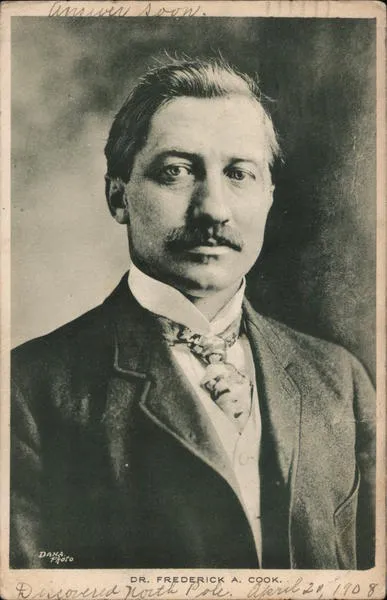 Photo: Dr. Frederick Cook, via www.cardcow.com
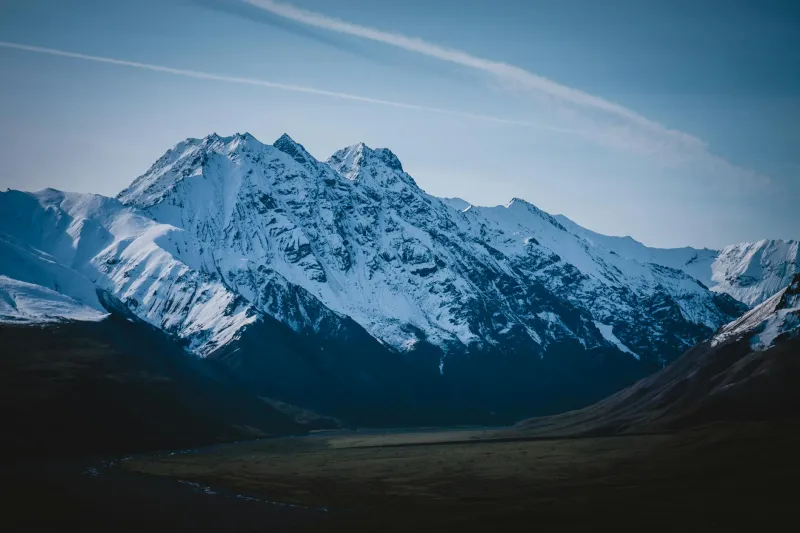
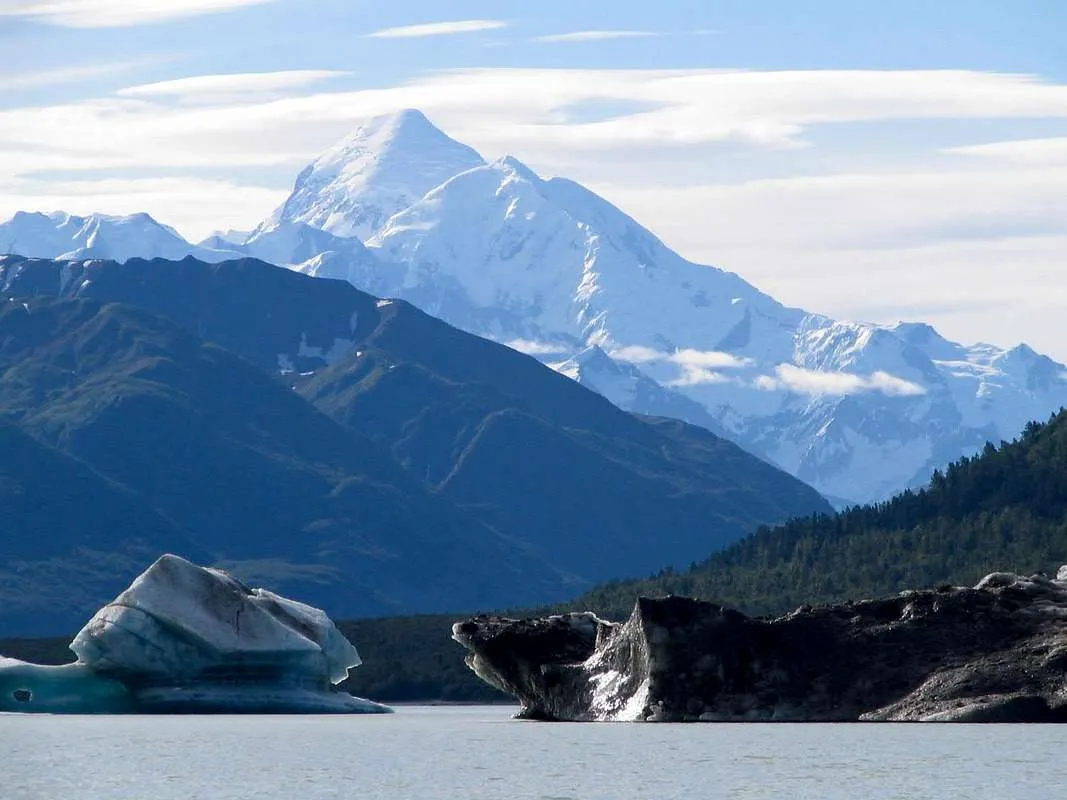 Photo: Mount Fairweather, via images-sp.summitpost.org
There was just one problem: they were standing on the wrong mountain.
When Maps Were More Art Than Science
To understand how such a monumental mix-up was possible, you need to grasp just how unmapped Alaska was in 1906. The territory had been purchased from Russia less than 40 years earlier, and vast stretches remained as mysterious as the surface of Mars.
Mount Fairweather, standing at 15,325 feet on the border between Alaska and British Columbia, was known to exist—Russian explorers had spotted and named it in the 1700s. But "known to exist" and "accurately mapped" were two very different things.
The U.S. Coast and Geodetic Survey had rough sketches based on distant observations, but no one had actually approached the mountain closely enough to map the surrounding terrain. In the jumbled landscape of southeastern Alaska, where massive peaks rise directly from the sea and glaciers carve constantly changing valleys, even experienced mountaineers could easily mistake one summit for another.
The Expedition That Couldn't Go Wrong
Dr. Frederick Cook was already famous for Arctic exploration when he organized the Fairweather expedition. He'd accompanied Robert Peary on Greenland expeditions and would later claim (controversially) to have reached the North Pole. The Fairweather climb was supposed to be a relatively straightforward victory to add to his resume.
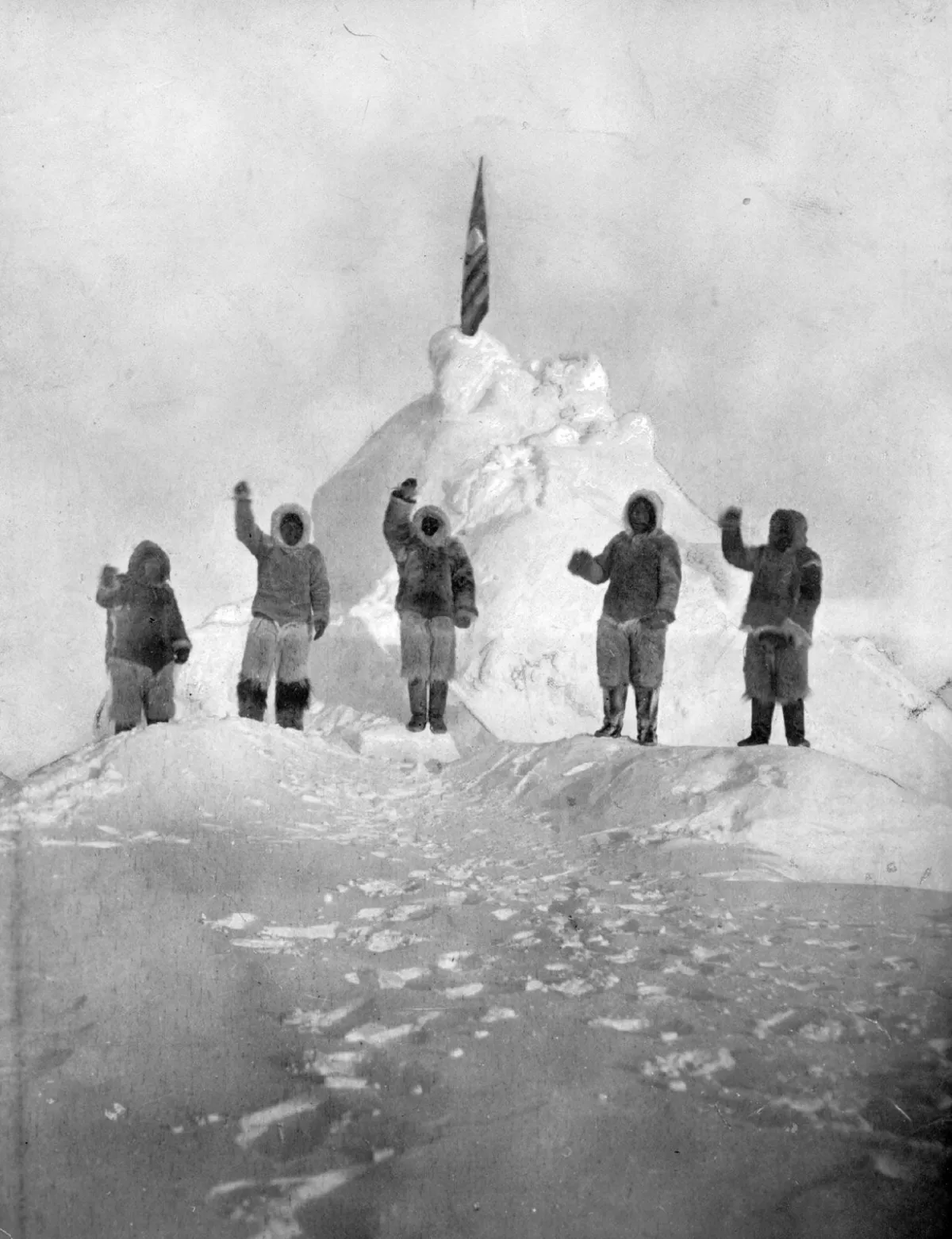 Photo: Robert Peary, via cdn.britannica.com
Cook's team approached from the southeast, following what they believed were the routes indicated on their maps. After days of difficult climbing through crevassed glaciers and unstable ice, they reached what appeared to be the highest summit in the area.
The view was spectacular—endless peaks stretching to the horizon, the Pacific Ocean gleaming far below. Cook took photographs, made scientific observations, and carefully noted their route for future expeditions. Everything suggested they had indeed conquered Mount Fairweather.
The Celebration That Made It Real
News of the successful climb spread quickly. The mountaineering community hailed it as a significant achievement—Fairweather was considered one of the most technically challenging peaks in North America. Scientific journals published Cook's route descriptions and photographs.
The National Geographic Society featured the expedition in their magazine, complete with Cook's summit photos and detailed maps of their approach. The images showed a dramatic, snow-covered peak with the kind of commanding views expected from one of Alaska's highest mountains.
For three years, the climbing world accepted Cook's achievement without question. Why wouldn't they? The photographs were real, the descriptions were detailed, and Cook was a respected explorer. In an era when expedition claims were largely taken on faith, no one thought to verify the actual location.
When Reality Caught Up
The truth emerged during a 1909 U.S. Geological Survey mapping expedition. Using new triangulation techniques and more precise instruments, surveyors began accurately plotting the positions of major peaks in the region.
When they located the actual Mount Fairweather and compared it to Cook's photographs and route descriptions, the discrepancies were glaring. The mountain Cook had climbed was roughly six miles northeast of Fairweather, separated by a substantial glacier valley.
The peak Cook's team had conquered was indeed a significant mountain—about 12,800 feet high and technically challenging to climb. But it wasn't Mount Fairweather, and it wasn't even named. In the understated language of government surveyors, their report noted that "the 1906 Cook expedition appears to have achieved the first ascent of Peak 12,800, previously undesignated."
The Awkward Truth
When confronted with the evidence, Cook initially disputed the findings. He argued that the government surveyors were using different reference points and that his original navigation had been correct. But as more detailed maps emerged, the case became impossible to defend.
The mountaineering community found itself in an awkward position. Cook had genuinely achieved a significant first ascent—just not the one he claimed. The climb itself was legitimate and impressive; only the identification was wrong.
Rather than create a scandal, most publications quietly began referring to the 1906 expedition as the "first ascent of the peak northeast of Mount Fairweather." Cook's photographs remained in geographic society archives, now labeled with the corrected location.
The Real Fairweather Remains
Ironically, Mount Fairweather wasn't successfully climbed until 1931, 25 years after Cook thought he'd conquered it. When a Canadian-American team finally reached the true summit, they found a mountain significantly more challenging than Cook's route had been.
The actual Fairweather proved to be a technical nightmare—unstable ice, unpredictable weather, and approaches that required weeks of glacier travel. Cook's "easier" route to the wrong mountain may have been a blessing in disguise.
Geography's Honest Mistakes
Cook's case wasn't unique in early Alaskan exploration. The territory was so vast and unmapped that similar mix-ups occurred regularly. Explorers "discovered" rivers that didn't exist, named mountains that were actually hills, and claimed first ascents of peaks that had been climbed by Native peoples for generations.
What makes Cook's story remarkable is how completely the mistake was accepted and celebrated. For three years, America believed it had conquered Mount Fairweather because a respected explorer said so, photographs seemed to confirm it, and no one had any way to check.
In our GPS-enabled world, Cook's mix-up seems almost impossible. But in 1906, when navigation relied on compass readings and rough sketches, mistaking one massive, snow-covered peak for another wasn't just possible—it was probably inevitable.
The mountain Cook actually climbed still bears no official name, though some maps informally label it "Cook Peak." It stands as a monument to the era when America's geography was still being written, and when even the experts could get spectacularly, celebratedly lost.