Twice Down, Same Water: The Great Lakes Freighter That Refused to Stay Lucky
There's a particular kind of dread that sailors on the Great Lakes have always understood. These aren't the romantic, horizon-stretching seas of adventure novels. Lake Erie is shallow, temperamental, and fast to anger. When a storm kicks up, ships don't have the luxury of riding deep swells — they get slammed by short, steep waves that hit harder and closer together than anything the open ocean typically throws at a vessel the same size. Sailors know this. They respect it. And yet, for one particular freighter, that knowledge wasn't quite enough — not once, but twice, separated by seventy years and a paperwork trail that still makes maritime historians shake their heads.
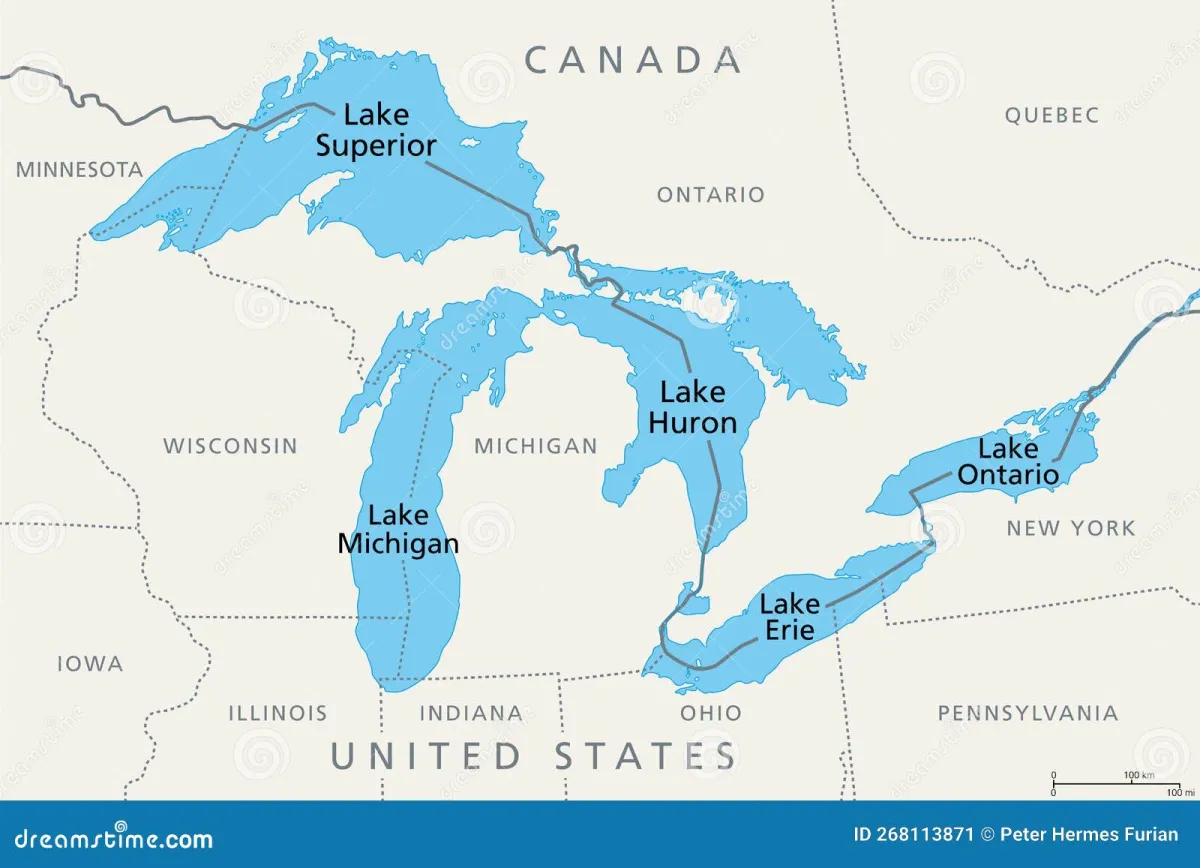 Photo: Great Lakes, via thumbs.dreamstime.com
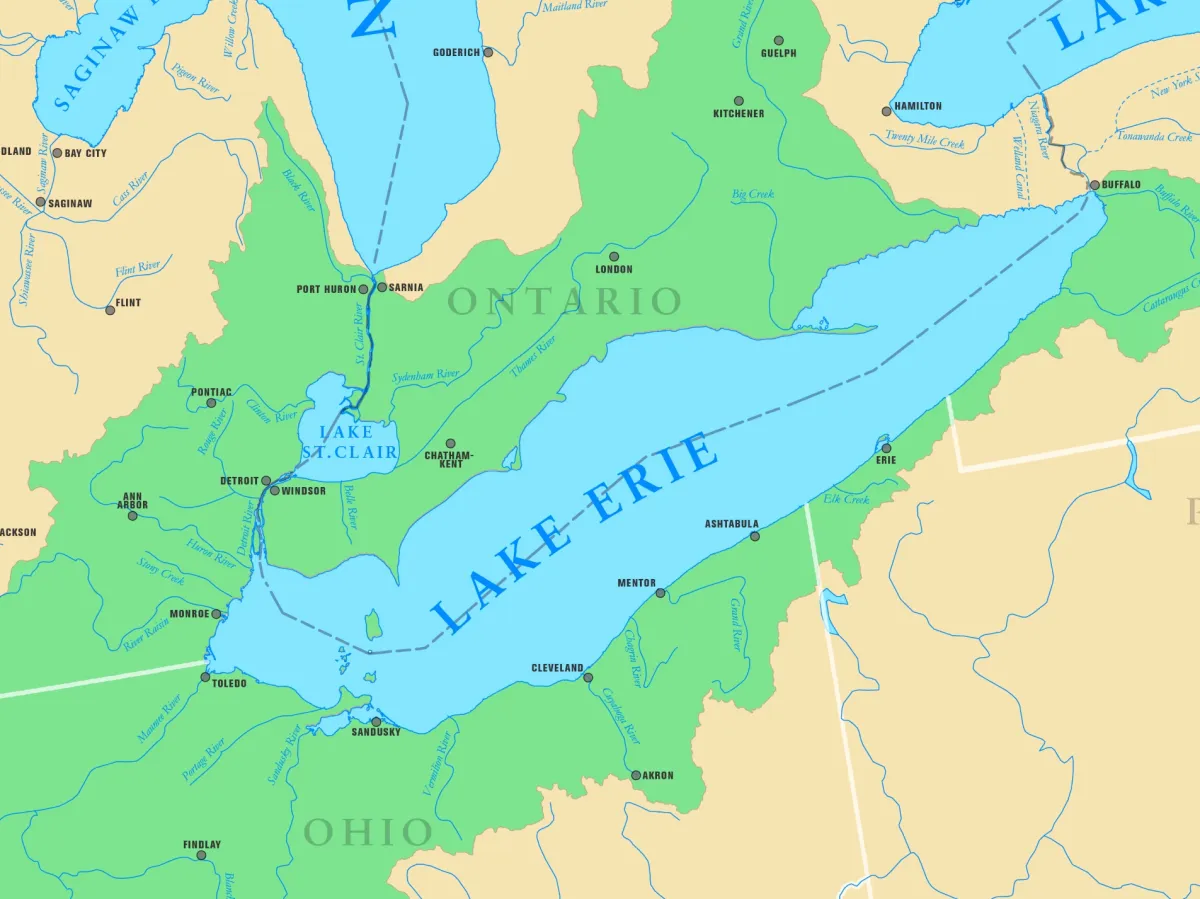 Photo: Lake Erie, via ontheworldmap.com
The First Time She Went Down
In the fall of 1909, the freighter was loaded and moving across Lake Erie on what should have been a routine haul. Autumn on the Great Lakes is when the weather turns mean with very little warning, and this crossing was no exception. A storm pushed in faster than the crew expected, and the ship — already riding low with cargo — took on water in conditions that left the men aboard very few good options.
She sank in the central stretch of Lake Erie, not far from shipping lanes that had already claimed a long list of vessels before her. The crew survived. That part, at least, went right. Within a relatively short time, salvage operators — a profession that thrived in the Great Lakes region, where shallow water made recovery economically worthwhile — located the wreck and pulled her back up. The hull was patched, the machinery was inspected and repaired, and the ship was certified to sail again. That decision probably seemed perfectly reasonable at the time. She was a working vessel in an era when steel and iron didn't come cheap, and a salvageable ship was money in the water.
So back she went.
Decades Pass, Memory Fades
For a long stretch of years, the ship did what ships are supposed to do: she moved cargo, changed hands a few times, accumulated a new generation of crew members who likely had no idea — or no particular concern — about her earlier misadventure beneath the lake. The story of the 1909 sinking probably circulated in the way that old maritime gossip does, passed between dock workers and harbor masters, maybe repeated over a drink in a port town, and then gradually filed away in the category of things that used to happen but probably won't again.
Ships with troubled histories aren't uncommon on the Great Lakes. The region's maritime record is dense with vessels that were repaired, renamed, and recommissioned after disasters. It's just the economics of the industry. You fix what you can fix and you put it back to work.
But Lake Erie, apparently, had not forgotten.
The Second Time Was Worse
Decades after that first sinking, the ship went down again — and this time, she didn't come back up in any form worth saving. The second disaster struck in conditions that bore an uncomfortable resemblance to the first: a storm, a heavily loaded hull, the same general corridor of water in the central lake. The crew in this second incident faced a far more serious situation than their predecessors had. The loss of life in the second sinking was real and devastating in a way the first incident had avoided.
When investigators and maritime historians later mapped both disasters against the lake's geography, the overlap was startling. The same ship, the same general stretch of water, the same season of the year. The probability of a salvaged vessel returning to service and sinking again — in the same lake, in roughly the same location — is the kind of number that statisticians write down and then stare at for a while.
Cursed Ship or Human Pattern?
The easy answer, the one that feels satisfying when you're sitting somewhere warm and dry, is to call the ship cursed. It's a concept with deep roots in maritime culture. Sailors have always been alert to vessels that seem to attract disaster, and the Great Lakes tradition is no different — the Edmund Fitzgerald alone has generated enough folklore to fill a library shelf.
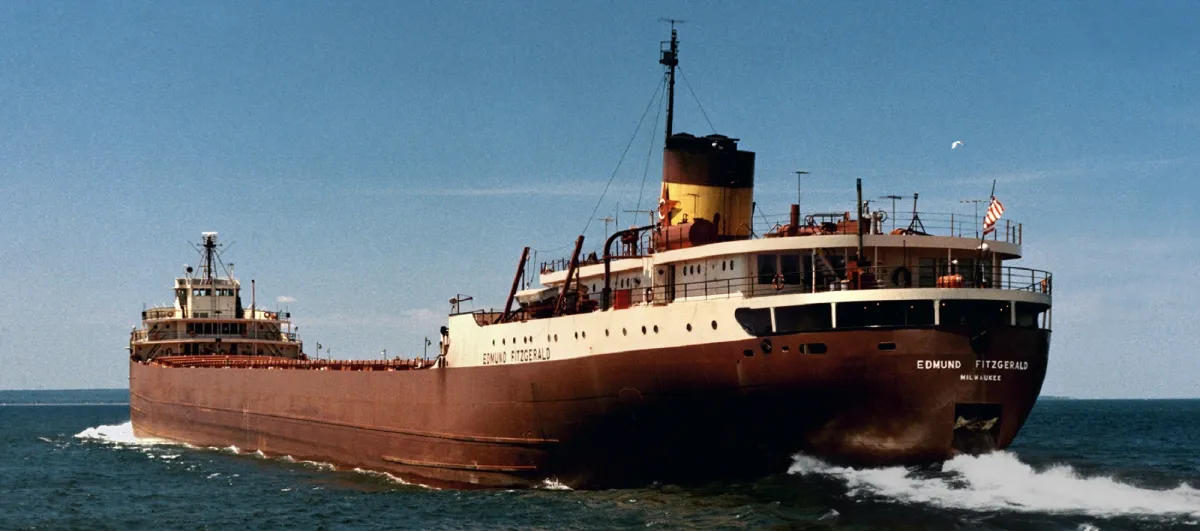 Photo: Edmund Fitzgerald, via shipwreckmuseum.com
But the more uncomfortable answer is that the second sinking wasn't really about fate. It was about the specific, repeatable way that human beings assess risk. When a ship is salvaged and returned to service, the decision-makers involved are looking at structural integrity and economic value. What they are not always looking at is the subtler question of why the vessel got into trouble in the first place. Was it the ship's design? The way she handled a loaded cargo in rough weather? Something about how her hull responded to the particular chop of a shallow lake?
If those questions weren't fully answered after 1909, then the repair job — however thorough — was essentially restoring a problem rather than solving one. And the lake would eventually present the same problem again.
What the Water Remembers
The Great Lakes have swallowed more than six thousand ships over recorded history. Lake Erie's shallowness means that many of those wrecks are still down there, sitting in water shallow enough that sport divers visit them on weekends. There's something quietly eerie about that — the idea that the evidence of every mistake is still visible if you know where to look.
The story of this particular freighter sits in that tradition, but with an extra layer of strangeness that most shipwreck histories don't carry. It's not just a ship that sank. It's a ship that sank, was given a second chance, and then proved — in the most definitive way possible — that the lake and the weather and the loaded hull were always going to win that argument eventually.
Whether that's a curse or just physics dressed up in grim clothing probably depends on how superstitious you are. Either way, the story has the quality that the best Great Lakes maritime tales always carry: it sounds like someone made it up, and it's completely true.