The Mix-Up in the Mortuary: When Two Families Spent Eleven Years Mourning the Wrong Man
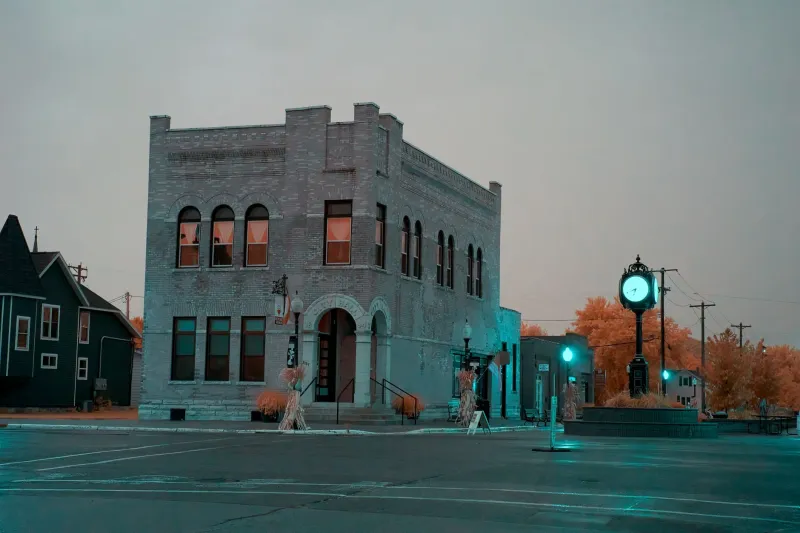
Small towns are supposed to be the places where nothing slips through the cracks. Everyone knows everyone. Faces are recognized. Names are remembered. The idea that something as consequential as a person's identity could be confused — not for a day, not for a week, but for over a decade — seems like exactly the kind of thing that couldn't happen in a close-knit community where strangers stand out and gossip travels faster than the mail.
And yet.
Two Men, One Terrible Night
The story begins with an accident — the specific details of which varied slightly across the regional newspaper accounts that covered it decades later, but whose essential shape is consistent across multiple sources. Sometime in the mid-20th century, in a small Midwestern town, two men were involved in the same fatal incident. Both died. Both were transported to the same local mortuary.
The men were similar in age and physical build. Neither carried identification on their person at the time of recovery. In the chaos and grief of the immediate aftermath, the mortuary made an identification based on what was available: the accounts of people who arrived at the scene, descriptions relayed secondhand, and the reasonable assumption that the two families who came to claim their dead were claiming the right people.
They weren't.
The exact mechanism of the swap — which family arrived first, what was said, whether paperwork was signed before or after the viewing — is where accounts diverge. What is not disputed is the outcome: two men were prepared, buried, and mourned under the wrong names. Two families went home believing they had laid their loved one to rest.
How Something Like This Stays Hidden
This is the part of the story that people find hardest to accept. How do you bury the wrong person and not know it for eleven years?
The answer, frustrating as it is, comes down to a convergence of factors that each seem minor on their own but together created an almost airtight seal around the mistake.
First: grief distorts perception. Families viewing a loved one after a traumatic death are not in a state of careful, critical observation. They are in shock. They see what they expect to see. The mind fills in familiar features where it wants to find them.
Second: the mortuary's records, once filed, became the official version of events. Death certificates were issued. Obituaries were printed. Headstones were ordered. At each step, the paperwork confirmed the paperwork. Nobody went back to the source.
Third — and perhaps most importantly — both families were grieving privately. In small-town America of that era, there was enormous social pressure to process loss with dignity and move forward. Expressing doubt about the identity of a buried family member wasn't just logistically complicated; it was emotionally unthinkable. To question the grave was, in a way, to dishonor it.
So both families moved forward. They visited headstones. They marked anniversaries. They built the stories of their loved ones' lives around the fact of those particular graves.
The Paper Trail That Wouldn't Quit
The unraveling began not with a dramatic revelation but with something almost mundane: a records review.
In the years following World War II, several states undertook systematic efforts to reconcile local death records with military service documentation, insurance claims, and Social Security filings — a bureaucratic housecleaning driven partly by the sheer volume of wartime paperwork that had accumulated and partly by early efforts to modernize vital records systems.
It was during one of these reviews, in the early 1960s, that a county records clerk noticed a discrepancy. The physical descriptions recorded in two death certificates from the same incident didn't match the descriptions that appeared in the corresponding military or insurance records for the named individuals. The mismatch was small — a notation about height, a detail about a distinguishing mark — but it was enough to flag the file for further review.
What followed was slow, careful, and conducted with as much discretion as the investigators could manage. They were aware, even before they had confirmed anything, that if the discrepancy was what it appeared to be, the consequences for two families would be profound.
By the time the review was complete, there was no longer much doubt. The bodies had been switched.
The Aftermath Nobody Had a Script For
Telling two families that they had been mourning the wrong man for eleven years is not a situation that comes with established protocol. The officials involved — county clerks, a local judge, a pastor — had to improvise.
Both families were notified privately, separately, and with what was described in later accounts as extraordinary care. The legal questions were complicated: death certificates had to be amended, estates that had been settled needed to be revisited, and in at least one case, a life insurance claim that had been paid out required a quiet administrative correction.
The emotional questions were harder. Both families had spent over a decade building their grief around a specific grave. The headstones bore the wrong names. The stories they had told themselves — and their children — about where their loved one rested were incorrect.
Some family members reportedly chose not to act on the information. The graves stayed as they were. Others requested corrections. At least one family pursued a formal disinterment.
None of it was clean. None of it was fast.
What Makes This Story Stick
Mortuary errors are not unheard of in American history — particularly in eras before DNA identification, when visual confirmation and paperwork were the only tools available. What makes this case remarkable is the duration. Eleven years is long enough for the mistake to become fully embedded in two families' histories, long enough for children to grow up with a fixed understanding of where a parent or grandparent was buried, long enough for the error to feel, in every practical sense, like the truth.
It's also a story about the limits of community knowledge. Small towns are supposed to catch these things. The intimacy that defines them is supposed to be a safeguard. And yet the same social forces that make small towns feel safe — the pressure to grieve quietly, to trust the official record, to not make a difficult situation worse — were exactly what kept the mistake buried.
For over a decade, two families visited the wrong graves. And in both cases, the grief was entirely real.