Switched at Death: The Missouri Mix-Up That Had Two Towns Mourning Total Strangers
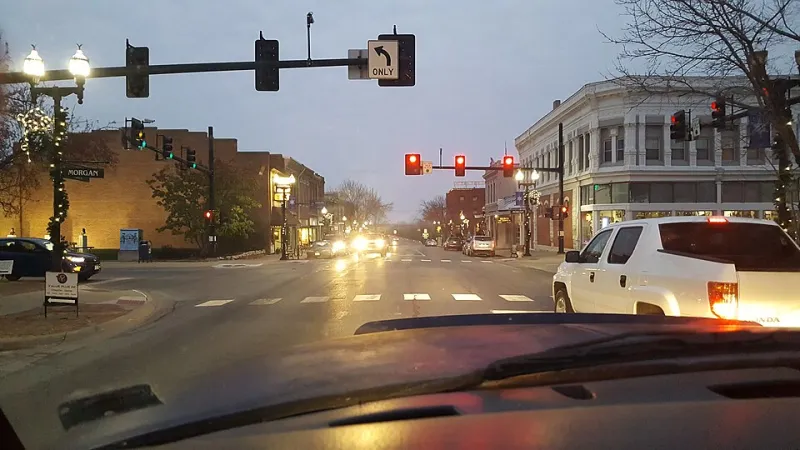
Photo: Robert Stinnett from Boonville, MO, USA, CC BY 2.0, via Wikimedia Commons
There's a particular kind of trust we extend to funeral homes. We hand over the most irreversible moment in a family's life and we assume, reasonably, that the professionals on the other end know whose body is whose. In the fall of 1977, a Missouri funeral home broke that trust in a way so quietly catastrophic that nobody noticed until the paperwork started contradicting itself — and by then, it was far too late to fix things the easy way.
Two men had died within days of each other. Two families were grieving. Two small Midwestern towns were preparing to say goodbye. And somewhere in the middle of all of it, a single administrative error set off a chain of events that would take weeks to unravel and years to fully reckon with.
How Something This Simple Goes This Wrong
Funeral home mix-ups are rarer than most people think, but they are not unheard of. The logistics of death — the intake of remains, the coordination between hospitals, coroners, and morticians — involve a surprising amount of paperwork moving between a surprising number of hands. In most cases, redundant checks catch errors before they become disasters. In this case, they didn't.
The two men shared certain similarities: comparable ages, deaths that occurred close together in the calendar, and remains that passed through the same facility before being routed to their respective families. The exact point of failure has been described differently in various accounts over the years, but the core of it was mundane — a mislabeled transfer, a tag that ended up on the wrong body, a moment of carelessness that nobody caught because everyone assumed someone else had already checked.
Both families received remains. Both families held services. Both families buried their loved ones and began the slow, exhausting work of grief.
The Quiet That Precedes the Chaos
For several weeks, nothing seemed wrong. That's the part of this story that's hardest to sit with. Two communities went about the ordinary business of mourning — settling estates, notifying relatives, returning to routines — while the actual remains of their loved ones lay in someone else's grave in another town.
It wasn't a dramatic revelation that broke things open. It was paperwork. Death certificates, insurance claims, and estate documentation have a way of forcing precision that emotional memory doesn't always demand. Discrepancies began to surface — small ones at first, the kind that get chalked up to clerical error, and then larger ones that couldn't be explained away. Someone made a phone call. Then another. Then the funeral home was involved, and then lawyers, and then the full weight of what had happened began to settle over both families simultaneously.
The reaction, by all accounts, was not anger first. It was disbelief. The idea that you had stood at a graveside and wept over a stranger — that the ceremony you'd organized, the words you'd chosen, the flowers you'd selected, had all been directed at someone your family had never met — is the kind of thing the mind resists accepting.
The Legal and Emotional Fallout
What followed was as complicated as you'd expect and then some. The question of whether to exhume the bodies — to physically correct the error — put both families in an impossible position. Exhumation is not a simple or painless process. It requires legal authorization, it costs money, and it forces a family to relive the burial they've already survived once. For some families in situations like this, the answer is no: the burial happened, the grief happened, and disturbing that feels like a second wound rather than a healing one.
Legal claims against the funeral home moved forward, though the specifics of settlements in cases like this are rarely made fully public. What the record does show is that both communities were left grappling with a question that has no clean answer: does it matter, in the end, whose physical remains are in a particular grave, if the person you loved is gone regardless?
For some people, the answer is an immediate and visceral yes. For others, the question itself becomes a kind of unexpected philosophical reckoning.
Why This Story Still Resonates
Decades later, the Missouri mix-up endures as one of those stories that gets passed around precisely because it sounds made up. The mechanics of it — the mundane error, the weeks of unknowing grief, the paperwork that finally told the truth — feel more like the plot of a dark short story than a thing that actually happened to real families in real towns.
But it did happen. And it happened not because anyone was malicious or reckless in any dramatic sense, but because routine processes failed in a moment of ordinary inattention. The tragedy isn't operatic. It's quiet and bureaucratic and completely, stubbornly real.
That's what makes it stick. We trust systems to handle the moments we're least equipped to handle ourselves. Most of the time, those systems work. And then, occasionally, they don't — and the consequences land on people who were already carrying more than they should have to.
Two towns buried strangers. Two families grieved the wrong graves. And somewhere in Missouri, the paperwork that was supposed to prevent all of it sat in a file, already wrong, waiting for someone to notice.