The Million-Dollar Math Error: How a Surveyor's Slip Created America's Most Permanent Mistake
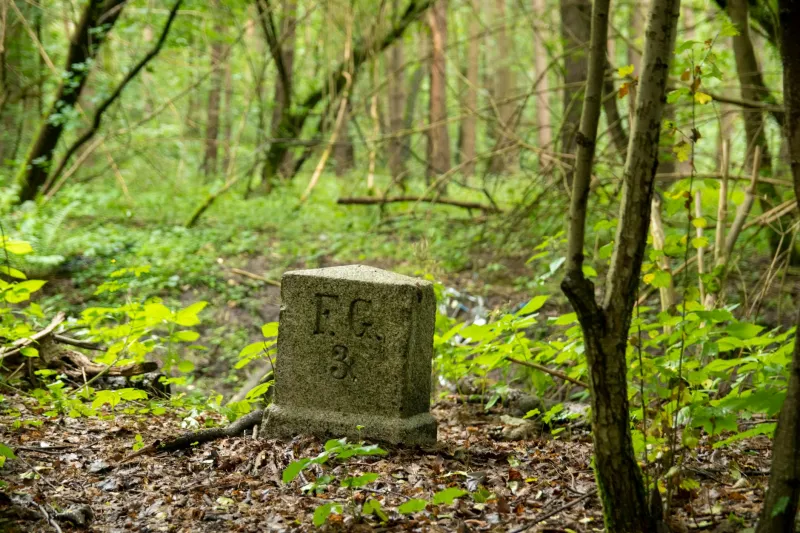
The Line That Shouldn't Exist
Somewhere in the American Midwest, there's a state border that runs exactly where federal law says it shouldn't. Thousands of people live on the "wrong" side of this boundary, paying taxes to states they technically shouldn't belong to, governed by laws that technically shouldn't apply to them. And the federal government is perfectly fine with this, because fixing the mistake would be far more disruptive than living with it.
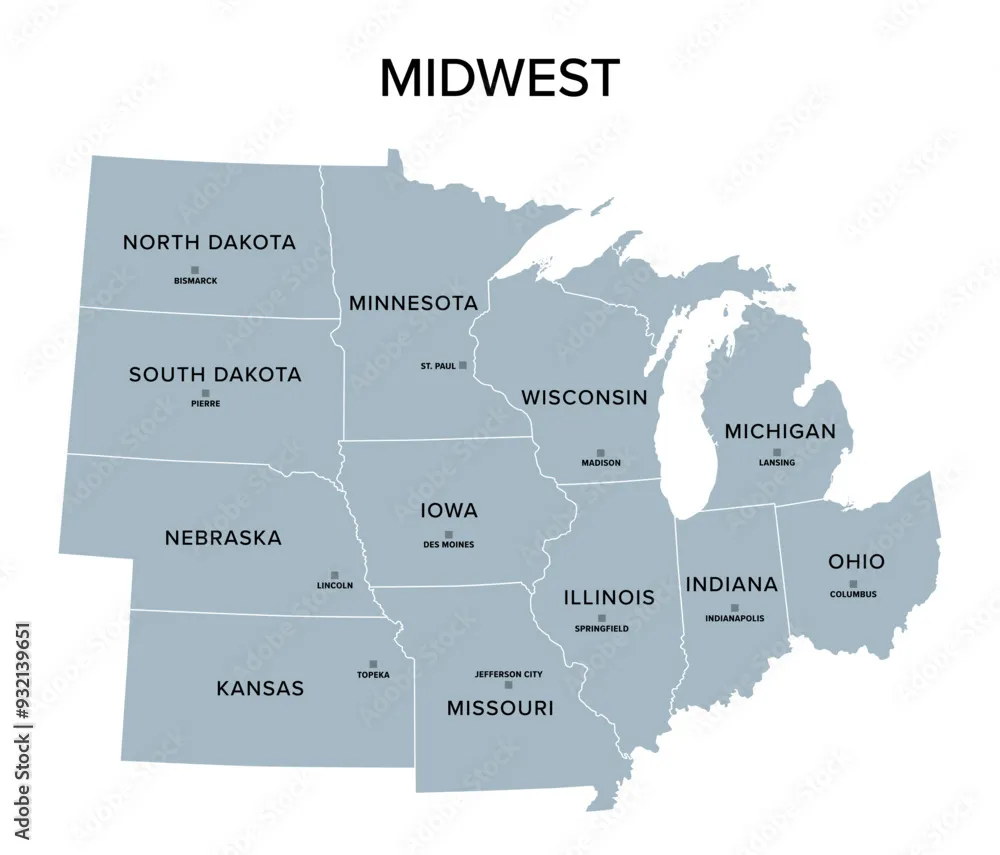 Photo: American Midwest, via as1.ftcdn.net
This is the story of how a surveyor's arithmetic error became one of America's most expensive permanent mistakes—and why sometimes, being wrong is more practical than being right.
When Boundaries Were More Theory Than Reality
In the 1840s, as America expanded westward, Congress faced the massive task of drawing precise borders between new states and territories. These weren't just lines on maps—they determined everything from tax collection to voting rights to which courts had jurisdiction over crimes.
The process seemed straightforward: Congress would pass legislation defining borders using specific geographic coordinates, then send federal surveyors to mark the actual boundary on the ground. Mathematical precision would create legal clarity.
But translating legal descriptions into physical reality proved far more complicated than anyone anticipated. Surveyors worked with heavy brass instruments, calculated distances using logarithm tables, and dealt with terrain that often bore little resemblance to the neat geometric assumptions made by lawmakers in Washington.
The Error That Changed Geography
In 1847, surveyor James Mitchell was assigned to mark the boundary between what would become two neighboring states. The congressional legislation was specific: the border should run along a line of latitude exactly 2 degrees and 18 minutes north of a particular river confluence.
 Photo: James Mitchell, via c8.alamy.com
Mitchell's job was to find that confluence, calculate the precise latitude, then mark a line running due east-west from that point. It required careful measurement, complex trigonometric calculations, and absolute precision.
Somewhere in his calculations, Mitchell made an error. Whether it was a mistake in measuring angles, a miscalculation in converting between different measurement units, or simply a transcription error in his field notes, the result was the same: the line he marked and surveyed ran approximately 3.7 miles north of where Congress had legally placed the border.
The Infrastructure That Made Mistakes Permanent
For the first few years, the error didn't matter much. The region was sparsely settled, and the difference between the legal border and the surveyed border was largely academic. But as settlement increased, communities began organizing around Mitchell's marked boundary.
County courthouses were built just south of Mitchell's line, assuming they were in the southern state. Towns incorporated using the surveyed border as their reference point. Farmers bought land and registered deeds based on which state they believed they were in.
By 1855, the "wrong" border had become the foundation for an entire regional infrastructure. School districts, tax collection systems, and local governments all operated using Mitchell's line rather than the legal boundary.
When Someone Finally Checked the Math
The error was discovered in 1858 during a routine resurvey ordered by the General Land Office. New surveyor William Hendricks was tasked with confirming Mitchell's work before the region's final transition to statehood.
Using more precise instruments and double-checking his calculations, Hendricks quickly realized that Mitchell's border was significantly off. When he calculated the actual position of the legal boundary, he found it ran through the middle of three county seats, bisected a major river port, and would place several established communities in the wrong state.
Hendricks faced an impossible situation. The legal border was clear, but following it would create chaos for thousands of residents who had organized their lives around the incorrect line.
The Government's Practical Solution
Rather than create a bureaucratic nightmare, Congress chose the path of least resistance. In 1859, they passed corrective legislation that quietly moved the official state boundary to match Mitchell's surveyed line.
The new law was deliberately obscure, buried in a larger piece of statehood legislation. It simply stated that "the boundary heretofore surveyed and marked shall constitute the official border between the states," without explicitly acknowledging that the original survey had been wrong.
This meant that approximately 847 square miles of territory that should have belonged to the southern state was permanently transferred to the northern state. Thousands of residents found their legal state citizenship changed by congressional decree, though most never realized it had happened.
The Ripple Effects of Permanent Error
The boundary change had subtle but lasting effects. Tax revenues that should have gone to the southern state instead flowed north. Congressional district lines were drawn using the incorrect border, slightly altering political representation. Even today, economic development in the region reflects the 19th-century mistake rather than the original legal intent.
Local historians occasionally rediscover the story, but most residents remain unaware they're living with the consequences of a surveyor's arithmetic error. The "wrong" border has been in place for over 160 years—longer than the "correct" border ever existed.
America's Geography of Mistakes
Mitchell's error wasn't unique. Across the American West, dozens of state and territorial boundaries reflect surveying mistakes, computational errors, or simple misunderstandings of congressional intent. The difference between legal geography and actual geography is far larger than most people realize.
In some cases, these errors created decades of legal disputes. But more often, like Mitchell's mistake, they were quietly accepted as the new reality. Fixing surveying errors after communities had grown around them proved consistently more disruptive than simply living with the mistakes.
The Mathematics of Permanence
What makes Mitchell's error fascinating isn't just that it happened, but that it became permanent through sheer practical inertia. A simple arithmetic mistake—probably involving nothing more complex than basic trigonometry—literally redrew the map of America.
The story reveals something essential about how geography actually works in practice. Legal boundaries exist on paper, but real boundaries exist where people build courthouses, establish school districts, and pay taxes. When the two don't match, reality usually wins.
Today, GPS technology makes Mitchell's kind of error nearly impossible. But somewhere in the American Midwest, his mathematical mistake remains carved into the landscape—a permanent reminder that sometimes the most lasting human achievements are the ones we never intended to create.