The Paperwork Paradise: When a Government Typo Accidentally Created America's Most Protected Wilderness
The Mistake That Saved a Mountain Range
Sometime in the late summer of 1897, a congressional clerk working through a stack of routine land transfer documents made the kind of simple clerical error that usually results in nothing more than a corrected filing and a brief apology. This particular mistake, however, accidentally created what would become one of America's most fiercely protected wilderness areas – and it took federal lawyers nearly four decades to figure out what had happened.
The error involved a single misplaced decimal point and the wrong administrative code, but its consequences would reshape American conservation policy in ways that no environmental activist of the era could have imagined.
Gilded Age Land Grab Politics
To understand how a filing mistake could have such enormous consequences, you need to understand the chaotic state of federal land policy in the 1890s. The Gilded Age was the era of massive railroad grants, mining claims, and timber concessions – a time when Congress routinely transferred millions of acres of public land to private interests with minimal oversight or environmental consideration.
Land legislation moved through Congress at breakneck speed, often with dozens of separate transactions bundled into single bills that representatives barely had time to read, much less analyze. Congressional clerks worked under enormous pressure to process paperwork for these transfers, and accuracy often took a backseat to speed.
The particular bill that would create our accidental wilderness area was supposed to transfer a large tract of mountainous land in what is now Montana to a mining consortium that had discovered significant copper deposits. It should have been a routine transaction – the kind that happened dozens of times each legislative session.
The Devil in the Details
The original legislation called for transferring approximately 85,000 acres under Section 4 of the General Mining Act, which would have given the consortium broad rights to extract minerals while maintaining minimal environmental protections. The clerk, however, apparently misread either the acreage figure or the administrative code – or possibly both.
Instead of filing the transfer under Section 4 of the Mining Act, the paperwork ended up processed under Section 4 of the Forest Reserve Act, a completely different piece of legislation designed to protect watershed areas from commercial exploitation. And instead of 85,000 acres, the filing somehow specified 850,000 acres – a tenfold increase that encompassed not just the mining area but an enormous swath of pristine wilderness surrounding it.
The error created an immediate legal contradiction: the same land was simultaneously granted to a mining company and placed under federal protection as a forest reserve. Under normal circumstances, such an obvious mistake would have been caught and corrected within days.
When Nobody Notices
But these weren't normal circumstances. The mining company was focused on a much smaller area where their actual copper deposits lay, and they began operations without carefully checking the boundaries of their federal grant. The Forest Service, meanwhile, was a brand-new agency overwhelmed with managing millions of acres of newly designated reserves, and they simply added the area to their maps without investigating how it had been acquired.
For nearly two years, both parties operated under the assumption that the paperwork was correct. The miners extracted copper from their original site, while forest rangers began managing the surrounding wilderness as protected federal land. Neither group had any reason to examine the underlying legal documents that created this arrangement.
The first hint of trouble came in 1899, when the mining company attempted to expand their operations into areas that forest rangers insisted were protected wilderness. What began as a simple boundary dispute quickly escalated into a legal nightmare that would consume federal courts for decades.
The Lawyers Take Over
Federal attorneys assigned to resolve the dispute quickly realized they were dealing with something unprecedented. The same land appeared to be legally designated for both mineral extraction and wilderness protection – a contradiction that existing law provided no mechanism to resolve.
Making matters worse, by 1899 the "protected" area had already attracted significant attention from conservationists, who had begun lobbying Congress to maintain its wilderness status. The mining company, meanwhile, had invested substantial capital in operations based on their understanding of their federal grant.
Each side hired teams of lawyers who spent years combing through congressional records, trying to determine the original legislative intent. The mining company argued that the large acreage figure was obviously an error and that their mineral rights should take precedence. Conservationists countered that regardless of how the designation had occurred, the land was now legally protected and should remain so.
Bureaucratic Limbo as Conservation Strategy
While lawyers argued, something remarkable happened: the disputed land remained effectively frozen in its protected status. Mining operations were suspended pending legal resolution, logging was prohibited under forest reserve regulations, and the area became a de facto wilderness preserve maintained by bureaucratic gridlock.
This accidental protection came at a crucial time in American environmental history. The 1890s and early 1900s were the peak years of industrial exploitation of western lands, when vast areas of old-growth forest were clear-cut and entire mountain ranges were strip-mined for minerals. The bureaucratic mistake that created our accidental wilderness area saved it from the same fate that befell countless other pristine landscapes during this era.
By 1910, the area had become a favorite destination for early wilderness enthusiasts, who had no idea they were hiking through a landscape preserved by clerical error rather than environmental vision.
The Resolution Nobody Wanted
The legal dispute finally reached resolution in 1934, when the Supreme Court ruled that regardless of the original intent, the forest reserve designation had been properly filed and therefore took legal precedence over the mining grant. The mining company received financial compensation for their lost claims, but the land remained under federal protection.
 Photo: Supreme Court, via www.thoughtco.com
By this point, however, the "accidental wilderness" had developed a constituency that extended far beyond the lawyers who had been fighting over it. Conservationists, hikers, and wildlife enthusiasts had discovered what they considered one of America's most spectacular wilderness areas, and they weren't about to let it be developed regardless of how it had been preserved.
Legacy of an Error
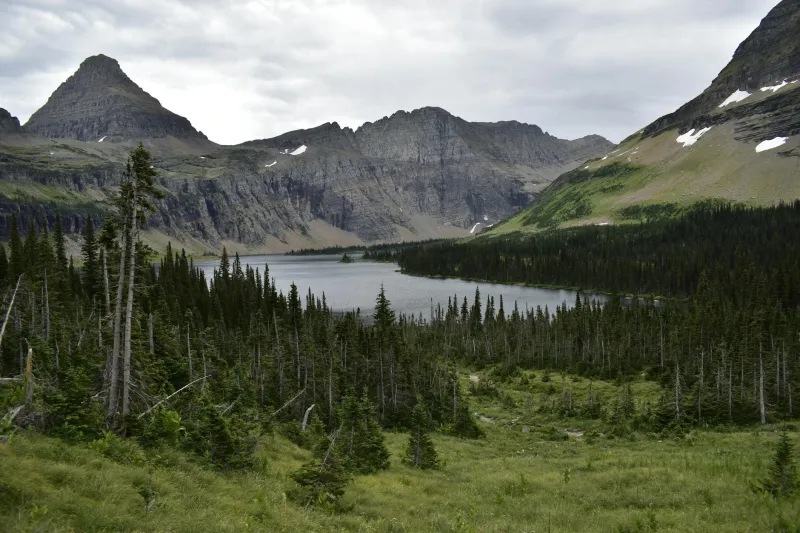
Today, the area that was accidentally preserved by a clerk's mistake in 1897 forms the core of one of America's most pristine wilderness areas. The landscape that should have been strip-mined for copper instead hosts some of the most spectacular hiking, wildlife viewing, and wilderness experiences available anywhere in the lower 48 states.
Environmental historians consider the accidental preserve a perfect example of how bureaucratic confusion sometimes accomplishes more for conservation than deliberate policy. The clerk who made the original filing error created more protected wilderness than most environmental activists of his era managed through years of deliberate lobbying.
The Irony of Preservation
Perhaps most remarkably, the wilderness area preserved by bureaucratic accident has remained more strictly protected than many areas designated through conventional environmental legislation. Because its legal status was established through court decisions rather than political compromise, it has proven remarkably resistant to later attempts at development or boundary modifications.
The mining company that lost their original claim would probably be amazed to learn that their copper deposits remain untouched more than a century later, protected by the same paperwork error that cost them their investment. The landscape they planned to strip-mine for minerals instead became a testament to the power of unintended consequences – and the occasionally beneficial effects of government inefficiency.
Sometimes the best conservation policy is no policy at all, just a clerk with poor penmanship and a deadline to meet.