The Paperwork Mistake That Saved 800,000 Acres Forever
The Typo That Changed Everything
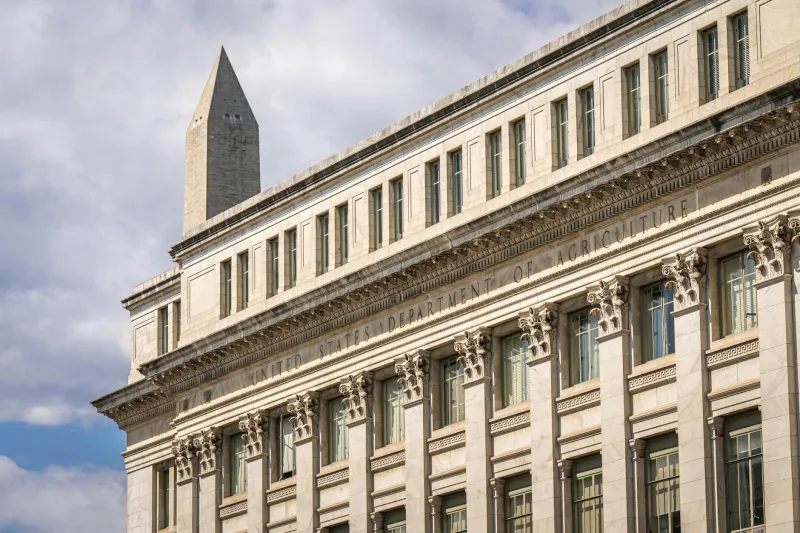
Somewhere in the labyrinthine federal building at 1849 C Street in Washington DC, a tired clerk made a mistake that would accidentally accomplish more for environmental conservation than decades of deliberate activism. With a single misfiled document and an incorrectly checked box, nearly 800,000 acres of pristine wilderness gained permanent federal protection—and nobody realized it for three years.
This wasn't a case of environmental advocates cleverly manipulating the system or politicians making grand conservation gestures. This was pure bureaucratic accident: a paperwork error so mundane that it nearly disappeared into the filing cabinets of history, except for the fact that it created one of America's most unexpected protected areas.
The Bureau of Land Management's Busiest Day
The story begins on April 15, 1967, in the Bureau of Land Management's Denver office, where clerk Margaret Hensley was processing what seemed like routine paperwork. The BLM was in the middle of a massive land classification project, reviewing millions of acres of federal property to determine their best use: grazing, mining, logging, or recreation.
 Photo: Bureau of Land Management, via seeklogo.com
Hensley had been working through a stack of classification forms for remote areas of southeastern Utah when she encountered Form 1394-B for a region designated as "Parcel 847-J." The form asked her to classify the land use category, and she had four options: Agricultural, Industrial, Recreational, or Protected.
The correct classification, according to her supervisor's notes, was "Agricultural"—the land was slated to be leased for cattle grazing. But Hensley was exhausted after a ten-hour day of identical forms, and her pen slipped. Instead of marking "Agricultural," she checked "Protected."
The Form That Nobody Double-Checked
Form 1394-B was supposed to undergo supervisory review before being filed, but April 15th was tax day, and half the office staff had called in sick. Hensley's supervisor, Robert Chen, was handling triple his normal workload and barely glanced at the paperwork before stamping it approved and sending it to the federal registry in Washington.
The form arrived at the Department of Interior three days later, where it joined thousands of other land classification documents in the weekly processing batch. A data entry clerk transferred the information to the federal land database, officially reclassifying Parcel 847-J from "Undesignated Federal Land" to "Protected Wilderness Area."
Just like that, 783,492 acres of southeastern Utah became federally protected wilderness, complete with all the legal safeguards that designation entailed. Mining was prohibited. Logging was banned. Even road construction became illegal without extensive environmental impact studies.
Three Years of Accidental Conservation
For three years, nobody noticed the error. The land in question was so remote that it rarely appeared in government reports or attracted public attention. It wasn't near any major cities, didn't contain famous landmarks, and wasn't part of any planned development projects.
The area sat quietly under its accidental protection, its ecosystems undisturbed by human activity that would have been legal under agricultural classification. Desert bighorn sheep roamed freely. Ancient petroglyphs remained untouched. Rare desert plants continued their slow growth cycles without interference.
Meanwhile, environmental groups across the country were fighting bitter battles to protect far smaller areas of wilderness, unaware that a clerical error had already accomplished more conservation than their most ambitious campaigns.
The Discovery
The mistake was finally discovered in March 1970, when mining company Western Extraction Corp applied for permits to begin copper mining operations in what they believed was unprotected federal land. Their application triggered an automatic review of the area's legal status, which revealed the mysterious "Protected Wilderness Area" designation.
BLM officials were baffled. They had no record of any environmental study that would justify protected status. There was no congressional legislation creating a wilderness area in that location. No presidential proclamation had set aside the land for conservation.
A frantic search through federal records eventually led investigators back to Margaret Hensley's misfiled form from 1967. The evidence was undeniable: a simple clerical error had accidentally created one of the largest protected wilderness areas in the southwestern United States.
The Legal Battle Nobody Expected
Western Extraction Corp demanded that the government correct the error and approve their mining permits. The company had invested millions in geological surveys and equipment, all based on the assumption that the land was available for industrial use.
But environmental lawyers saw an opportunity. Led by the Sierra Club's legal team, they argued that the three-year period of protection had created legal precedent. The land had been officially classified as wilderness, and changing that classification now would require the same environmental impact studies as any other change to protected status.
 Photo: Sierra Club, via www.sierraclub.org
The legal battle stretched for two years, during which time the accidental wilderness area remained protected. Environmental groups used the delay to document the area's ecological value, discovering several endangered plant species and archaeologically significant sites that strengthened their case for permanent protection.
When Accidents Become Policy
The case reached federal court in 1972, where Judge Patricia Hoffman faced an unprecedented legal question: what happens when a bureaucratic mistake creates environmental protection that turns out to be scientifically justified?
Hoffman's ruling was elegant in its simplicity. The federal government had legally designated the area as protected wilderness, and that designation had been in effect for five years. During that time, scientific studies had confirmed the area's ecological importance. Reversing the protection now would require proving that conservation was not in the public interest—a nearly impossible legal standard.
Western Extraction Corp's mining permits were denied. The accidental wilderness area became permanent.
The Clerk Who Changed Conservation
Margaret Hensley, meanwhile, had retired from the BLM and was living quietly in Denver when reporters tracked her down in 1973. She was amazed to learn that her paperwork error had created a major environmental victory.
"I always tried to be so careful with those forms," she told the Denver Post. "I never imagined that the one time I made a mistake, it would end up protecting all that beautiful land."
Hensley became an unlikely hero to environmental groups, though she insisted she deserved no credit for an accident. The Sierra Club presented her with a conservation award, which she accepted on behalf of "overworked government clerks everywhere."
The Legacy of Accidental Activism
The case established important legal precedent about the permanence of federal land classifications, even those created by mistake. More importantly, it demonstrated that sometimes the most effective environmental protection comes not from grand political gestures, but from the mundane machinery of government bureaucracy.
Today, the area that began as Parcel 847-J is officially known as the Hensley Wilderness Area, named for the clerk whose tired pen stroke accomplished more for conservation than most environmental campaigns. Visitors can hike its pristine trails, observe its protected wildlife, and marvel at landscapes that were saved not by activism or politics, but by a simple human error that turned out to be exactly right.
 Photo: Hensley Wilderness Area, via hikingproject.com
Sometimes the most important victories happen when nobody's paying attention, filed away in the endless paperwork that makes democracy possible—one misfiled form at a time.