One Wrong Date, One Stolen Legacy: The Timestamp That Erased an Inventor From History
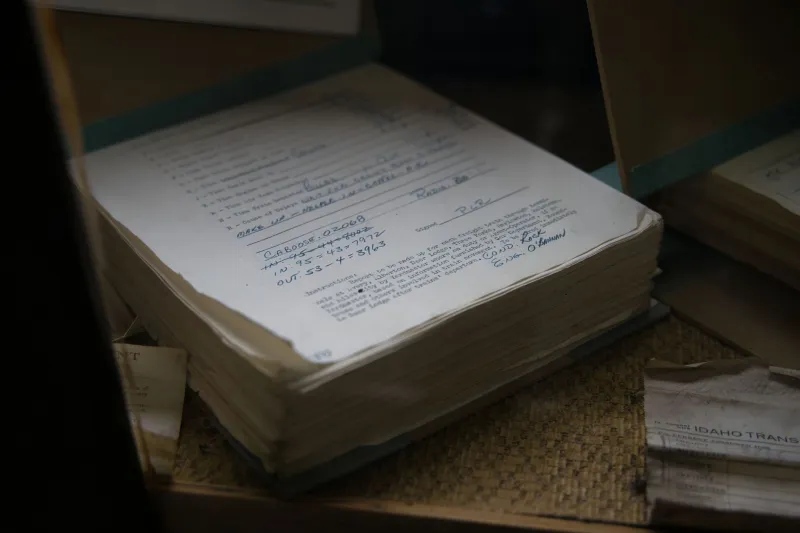
Patent law runs on timestamps the way a courtroom runs on evidence. The entire system — the legal framework that protects inventors and rewards innovation — rests on the assumption that the date written on a piece of paper is the date the paper actually arrived. One number off, and the whole architecture of priority collapses. Which is exactly what happened in 1910, when a filing clerk at the U.S. Patent Office made a clerical error so small it would fit in a single ink stroke, and so consequential that it handed one man's life's work to a stranger.
The Race to File
In the early years of the twentieth century, the American patent system was a genuinely high-stakes arena. Industrial expansion was accelerating, new technologies were emerging faster than legal frameworks could comfortably absorb them, and the difference between filing first and filing second could mean the difference between building a business and watching someone else build it with your ideas.
Two inventors — working independently, in different parts of the country — had arrived at essentially the same solution to an emerging mechanical problem in their shared industry. This kind of parallel invention was not unusual. When a particular technological need becomes obvious, multiple smart people often converge on similar answers around the same time. The patent system's job, in those situations, is to determine who got there first and to award the legal monopoly accordingly.
The first inventor submitted his application on a Tuesday. His paperwork was complete, his drawings were in order, and he had every reason to believe the process would unfold the way it was designed to. The second inventor filed days later.
The clerk recorded them in the wrong order.
What a Misdated Stamp Actually Does
To understand what happened next, it helps to understand how patent priority worked in this era. The Patent Office operated on a first-to-file basis — meaning the applicant with the earliest official receipt date had the legal claim. The date stamped on your paperwork when it arrived was not a formality. It was the entire ballgame.
When the clerk — through what appears to have been a routine, careless error rather than any deliberate misconduct — assigned the wrong date to the first inventor's application, the sequence was reversed on paper. The second inventor's filing now appeared to precede the first. When the examiner worked through the applications, he was looking at a record that told a false story, and he had no particular reason to question it. The paperwork said what it said.
The patent was awarded to the second inventor.
The Man Who Lost
The original inventor challenged the decision. Challenging a Patent Office ruling in 1910 was not a simple or inexpensive undertaking. It required legal representation, documentary evidence, and the ability to prove — against an official government record — that the official government record was wrong. This is a difficult argument to make in any era, and it was particularly difficult in an era when the institutional weight of a federal agency was considerable and the appeals process was slow.
The challenge went nowhere conclusive. The original inventor lacked the financial resources to sustain a prolonged legal fight, and without a successful appeal, the patent stood. He was left with the knowledge that his idea had been recognized, developed, and legally protected — just not for him.
He continued working in his field, as inventors tend to do, but the particular invention that should have defined his career and secured his finances had been legally transferred to another man's name by a clerk who almost certainly went home that Tuesday without any awareness of what he'd done.
What the Accidental Winner Built
The second inventor, for his part, did not simply sit on the patent. He moved quickly, licensing the technology to manufacturers who were eager for exactly this kind of solution, and used the resulting revenue to fund further development. Within a few years, the invention was embedded in an entire tier of American commercial production. The patent holder's name appeared in industry publications, in licensing agreements, in the kind of business correspondence that eventually ends up in archives.
He built, in other words, exactly what the original inventor had imagined building. The industry that grew up around the technology bore the second man's imprint in its legal documents and its corporate genealogy, while the first man's name drifted out of the professional literature and eventually out of the historical record entirely.
The Ledger That Never Got Corrected
What makes this story particularly uncomfortable is that the error was not, by all available evidence, the result of fraud. Nobody bribed the clerk. Nobody switched the applications. A government employee made the kind of small, forgettable mistake that people make every day in every office in the country — and the consequences were disproportionate in a way that the mistake itself could never have predicted.
The patent system was designed with the assumption that its administrative machinery worked accurately. When it didn't, there was no automatic correction mechanism, no audit that caught the discrepancy and flagged it for review. The error simply became the record, and the record became history.
The original inventor's name appears in a handful of contemporaneous documents — correspondence, local newspaper references, the kind of paper trail that survives in regional archives rather than national ones. Historians who have traced the episode note that the technical specifications in his original application are clearly prior to the awarded patent, but by the time anyone looked carefully at the sequence, the industry had already been built on the wrong foundation.
What a Single Timestamp Is Worth
It would be convenient if this story ended with a dramatic courtroom reversal or a posthumous recognition ceremony. It doesn't. The patent stood. The industry developed along the lines the second inventor's licensing strategy established. The original creator's contribution was absorbed into a history that didn't have his name attached to it.
What the story leaves behind is a specific, unsettling question about the systems we trust to record truth accurately. A timestamp is supposed to be a neutral fact. It's not supposed to be capable of redirecting an industry or erasing a person from their own legacy. In 1910, in a filing room that probably smelled like ink and paper dust, it did exactly that.