Face Value: The Time a Living Government Bureaucrat Ended Up on American Money
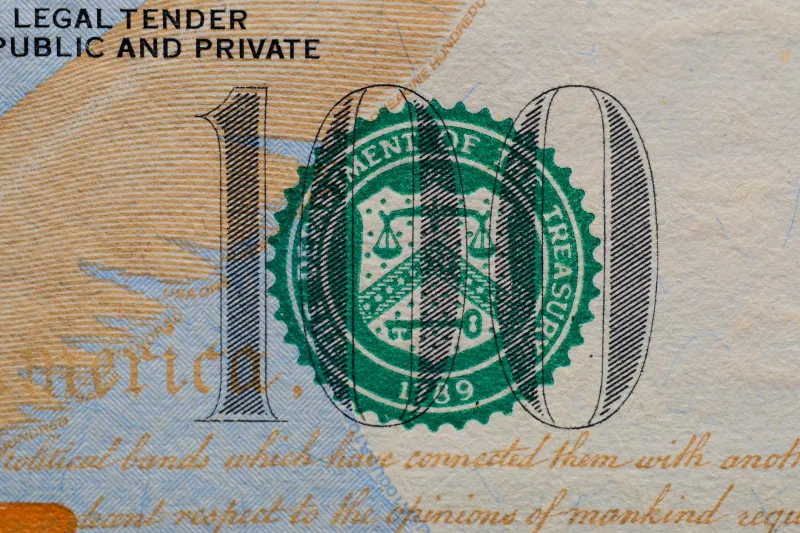
There's an unwritten rule in American civic life, one so deeply embedded that most people never think to question it: you don't put a living person on U.S. currency. Presidents, generals, founding fathers — sure, but only once they've safely passed into history. The idea of a breathing, taxpaying, still-arguing-with-his-colleagues government official staring back at you from a dollar bill feels almost absurd.
Which makes what happened in 1891 so spectacularly strange.
A Clerk, a Portrait, and a Very Bad Call
The story begins in the ordinary chaos of a busy government printing office. The U.S. Treasury was preparing a new series of silver certificates — paper currency backed by silver reserves — and needed portrait engravings for the bills. The process was bureaucratic and detail-heavy, with dozens of decisions made by mid-level officials who mostly assumed someone above them was double-checking the important stuff.
Somebody wasn't.
When the $1 silver certificate of the Series 1891 went to press, the face chosen for it belonged to Salmon P. Chase — a former Treasury Secretary and Chief Justice who had died in 1873. Perfectly acceptable. But on the $5 note of the same series, the engravers used a portrait of Spencer M. Clark, the then-superintendent of the National Currency Bureau. Clark wasn't a founding father. He wasn't a war hero. He was, by most accounts, a mid-ranking government functionary who happened to be alive and working in the same building where the decision was being made.
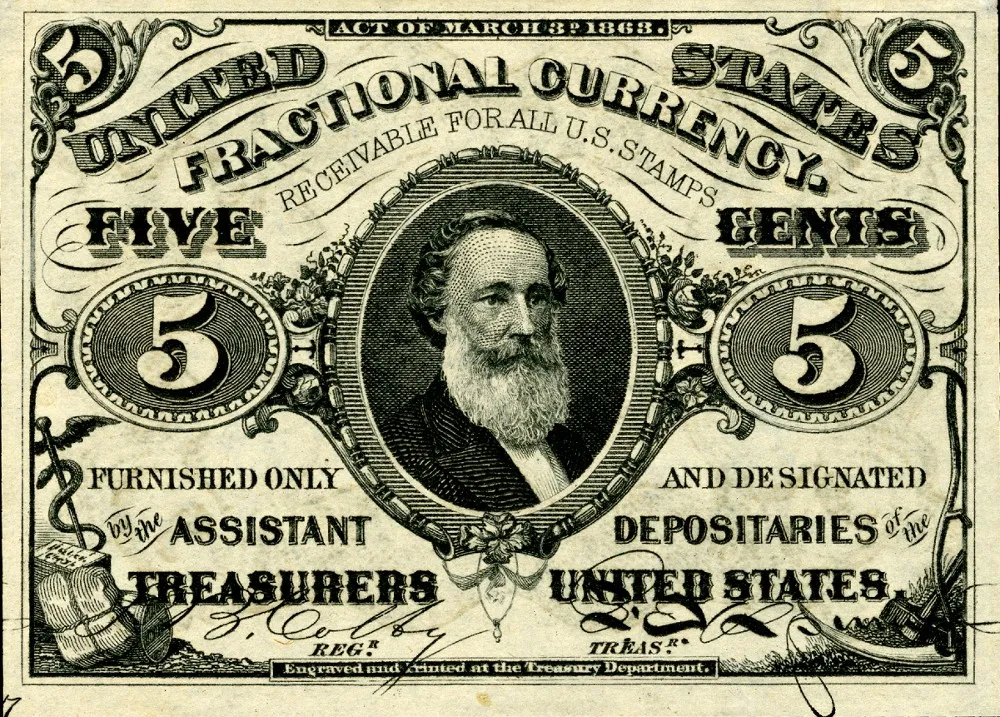 Photo: Spencer M. Clark, via www.bradycarlson.com
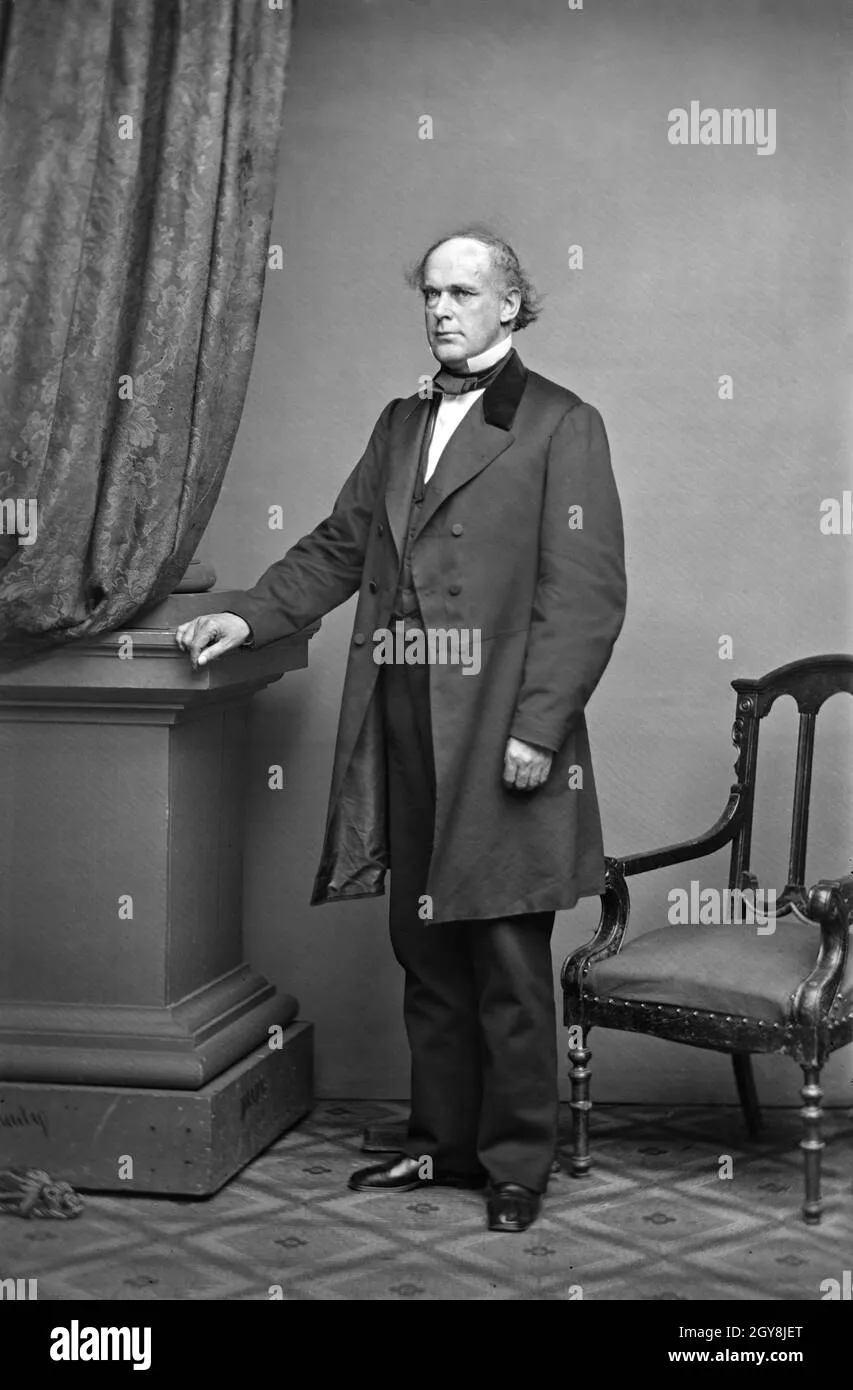 Photo: Salmon P. Chase, via c8.alamy.com
The choice reportedly came down to a combination of convenience and carelessness. Clark's portrait was accessible. Someone with the authority to approve it apparently did so without pausing to consider the optics — or the precedent.
Why It Mattered More Than It Sounds
To a modern reader, this might seem like a minor bureaucratic hiccup. So what if a living person ended up on a bill? People have appeared on stamps. Athletes appear on cereal boxes. What's the big deal?
But in the 1860s and beyond, currency carried a different kind of symbolic weight. Putting a face on money was an act of permanent national endorsement — a declaration that this person belonged to American history in a way that transcended ordinary public service. The unwritten rule existed precisely because that kind of immortality was supposed to be reserved for the dead, whose reputations had been fully weighed by time.
Putting a living person on a bill opened the door to all kinds of uncomfortable questions. What if that person later disgraced themselves? What if they became politically toxic? What if — and this was apparently a genuine concern at the time — they used the honor to inflate their own importance or influence?
Congress, it turned out, shared those concerns. Loudly.
The Quiet Scandal Nobody Quite Fixed in Time
When word spread that Clark's face had made it onto the five-cent fractional currency note — an earlier, smaller denomination that preceded the silver certificate controversy — legislators were not amused. Representative M. Russell Thayer of Pennsylvania reportedly called it an outrage, arguing that public money shouldn't be used to glorify private individuals who were still very much present to enjoy the publicity.
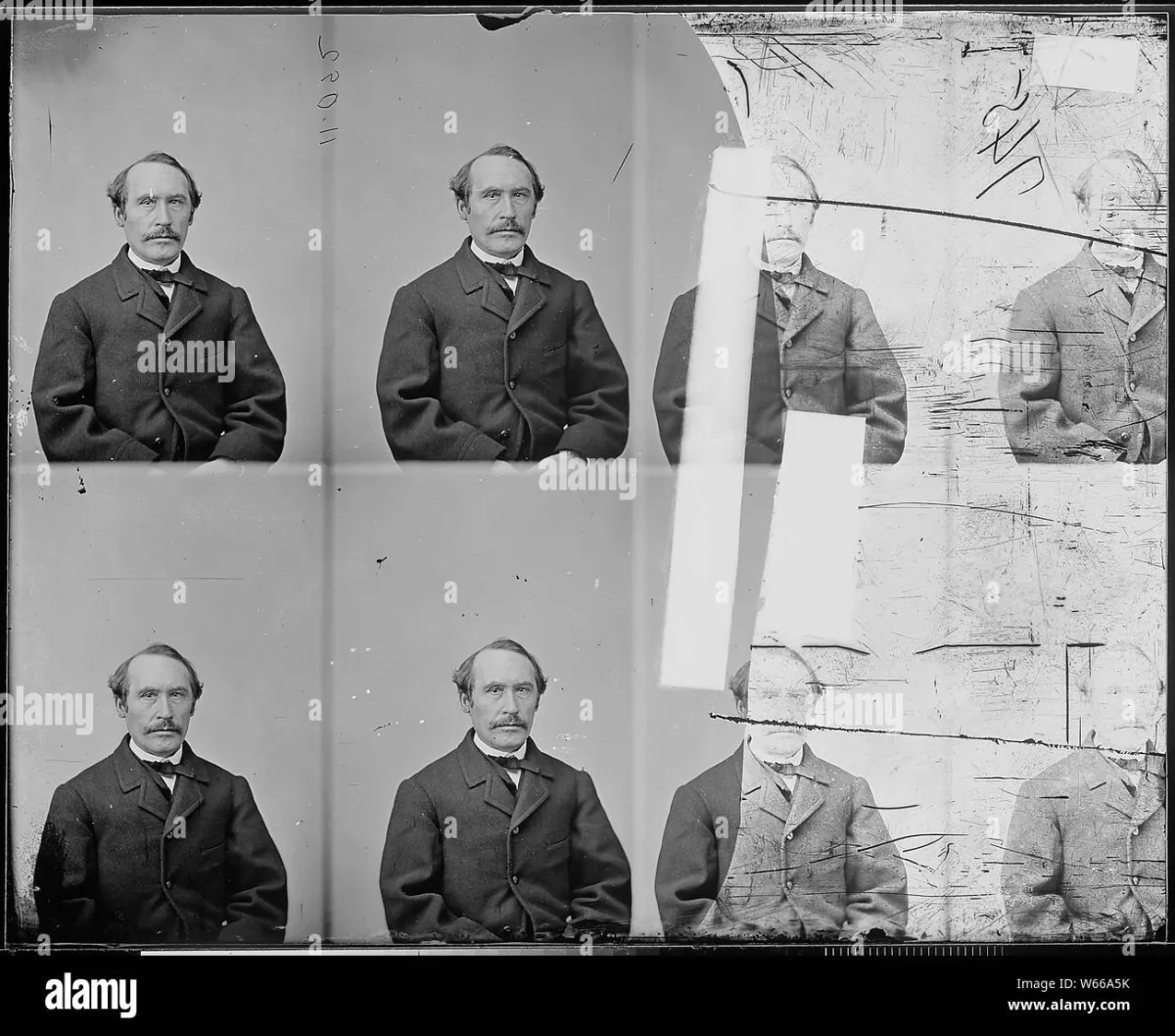 Photo: M. Russell Thayer, via c8.alamy.com
The criticism stung enough that Congress eventually passed a law in 1866 explicitly prohibiting the portrait of any living person from appearing on U.S. government securities or currency. It was one of those rare moments when Washington moved to close a loophole that probably should have been obvious from the start.
The problem was timing. By the time the prohibition was formalized and enforced, bills bearing Clark's image had already been printed and distributed. They were in wallets, cash drawers, and coat pockets across the country. Recalling circulating currency is a logistical nightmare under any circumstances, and the political appetite for a full-scale retrieval operation over an embarrassing portrait simply wasn't there.
So the bills stayed in circulation. People spent them. Shop owners made change with them. And somewhere in America, a living government official's face passed between strangers' hands every single day, attached to real monetary value, in direct violation of the spirit — if not yet the letter — of American tradition.
The Man on the Money
Spencer Clark himself reportedly did not protest the arrangement. Whether that was because he genuinely didn't mind, or because he understood that making noise about it would only draw more attention to the embarrassment, history doesn't clearly record. He continued working at the Treasury Department, presumably doing his best to avoid eye contact with his own face whenever a five-cent note crossed his desk.
He wasn't entirely without defenders. Some colleagues argued that the engraving had been a practical decision made under deadline pressure, not an act of vanity or self-promotion on Clark's part. The portrait existed. It was available. Someone used it. The system had failed, but Clark hadn't necessarily engineered that failure himself.
Still, the optics were rough. And the law that followed made sure no one would ever have to navigate those particular optics again.
The Rule That Stuck
The 1866 prohibition has held, more or less, ever since. It's the reason you won't find a sitting senator or a current cabinet secretary on your twenty-dollar bill — a rule born not from some grand philosophical debate, but from one bureaucrat's portrait ending up in the wrong place at the wrong time.
There's something almost perfectly American about that origin story. A sweeping, permanent national standard, enforced by federal law, triggered by a mid-level printing office that just needed a face and grabbed the most convenient one available.
The bills are long gone from circulation, of course. But the rule they accidentally created? That one's still very much alive.