Eight Miles of Nothing: The Last Mule Mail Route in America Is Still Running — and Nobody's Replacing It
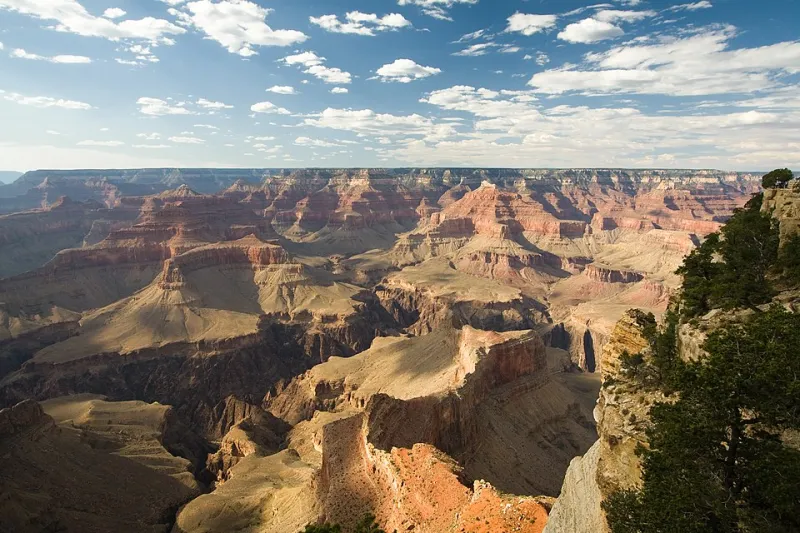
Photo: Luca Galuzzi (Lucag), CC BY-SA 2.5, via Wikimedia Commons
Eight Miles of Nothing: The Last Mule Mail Route in America Is Still Running — and Nobody's Replacing It
Somewhere in the United States Postal Service's vast operational network — the trucks, the sorting facilities, the automated systems, the suburban mail carriers with their right-hand-drive vehicles — there is a mule named something practical, carrying a canvas bag full of letters and packages down a canyon trail that no vehicle has ever successfully navigated. This has been happening, without meaningful interruption, since 1896. It will probably happen tomorrow.
Supai, Arizona sits at the bottom of Havasu Canyon, a side branch of the Grand Canyon roughly eight miles from the nearest point accessible by road. It is the tribal capital of the Havasupai people, one of the most geographically isolated communities in the continental United States, and it holds a distinction that the Postal Service doesn't advertise heavily but can't deny: it is the last place in America where the mail comes by mule.
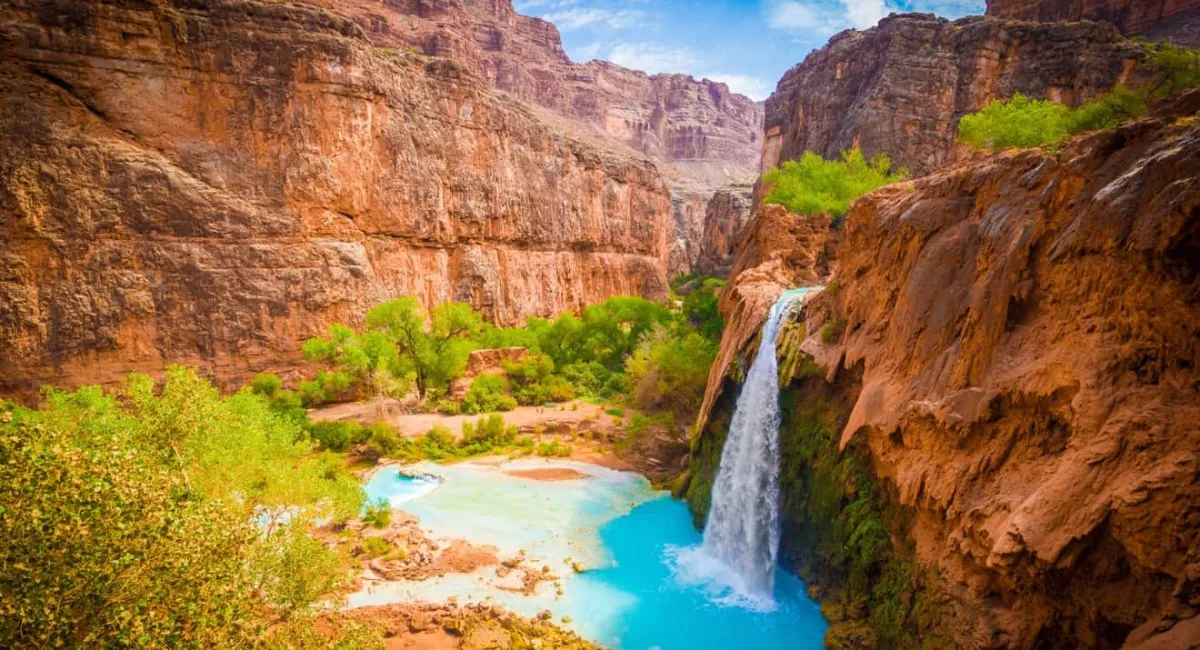 Photo: Havasu Canyon, via www.travelinusa.us
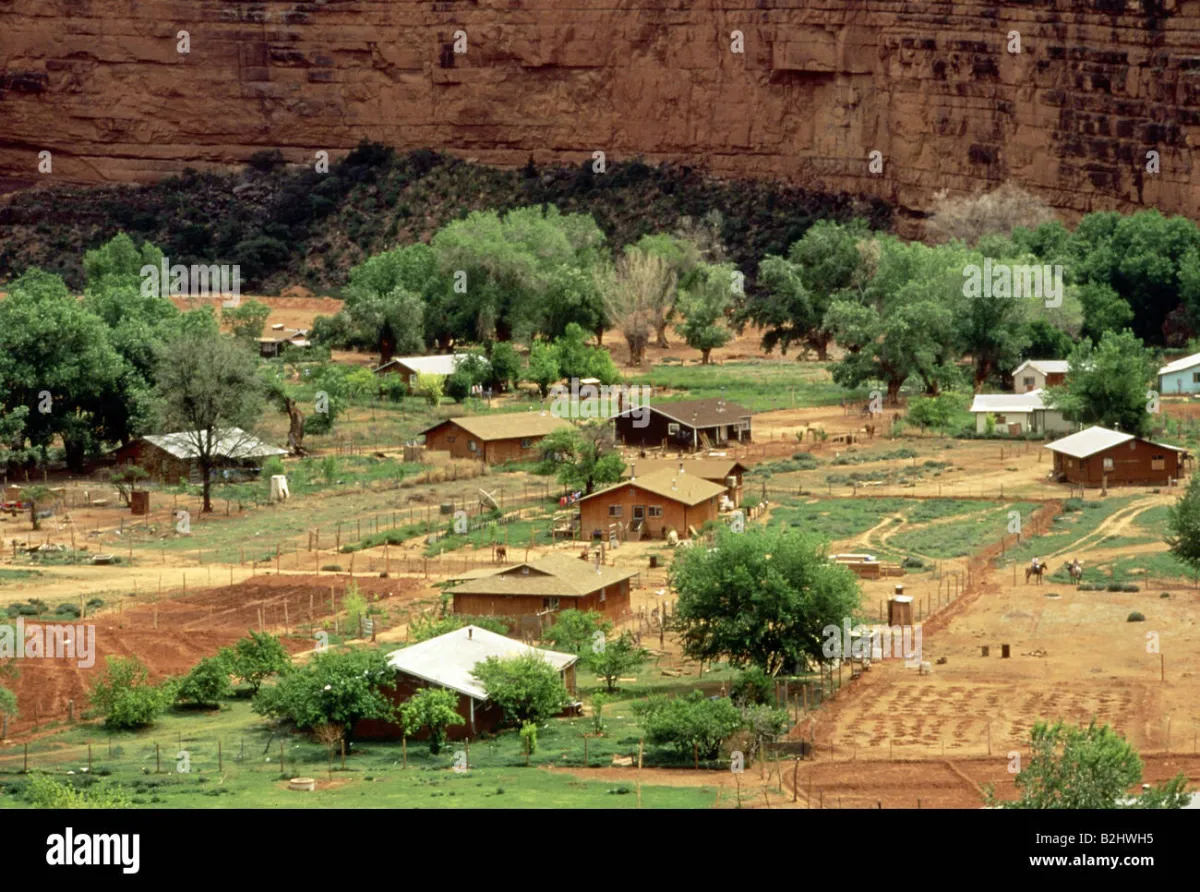 Photo: Supai, Arizona, via c8.alamy.com
The Geography That Made This Necessary
To understand why the mules are still running, you have to understand what Supai is up against topographically. The village sits at an elevation roughly 2,000 feet below the canyon rim, accessible only by a trail that descends through narrow switchbacks and sheer rock walls. There is no road. There has never been a road. The terrain that makes Havasu Canyon one of the most visually spectacular places in the American Southwest — the red rock walls, the turquoise waterfalls that draw hikers from around the world — is exactly the terrain that makes conventional infrastructure impossible.
Helicopters can reach the village, and they do carry some cargo and emergency supplies. But for everyday mail and packages — the catalogs, the prescription medications, the Amazon orders, the birthday cards — the mule train is what shows up. Three days a week, a string of mules makes the eight-mile descent from Hualapai Hilltop down into the canyon, delivers the mail, and makes the climb back out.
The route has operated this way since the late 19th century, when the Postal Service first established service to the community. The technology of American mail delivery has changed almost beyond recognition in the century-plus since then. The Supai route has not.
Why Modernization Keeps Losing
It's not as though no one has tried. Over the decades, various proposals have circulated for updating how Supai receives its mail and supplies. Drone delivery, which the USPS and private carriers have tested in other remote areas, sounds like an obvious candidate. But drone programs require charging infrastructure, maintenance facilities, regulatory airspace clearance, and reliable enough technology to handle the canyon's unpredictable wind conditions. The logistics of setting that up in one of the most remote spots in the American Southwest have consistently outweighed the appeal.
A road into the canyon has been proposed and rejected multiple times, and not only for logistical reasons. The Havasupai Tribe has significant say over what happens within their land, and the community has historically been protective of the canyon environment that defines their home. A road capable of handling delivery trucks would alter the landscape in ways that go well beyond mail delivery.
So the mules keep walking. The Postal Service contracts with local packers — Havasupai community members who know the trail and manage the animals — and the system functions. It's slow by modern standards, obviously. It costs more per delivery than almost any other route in the country. But it works, and in the absence of a better alternative that anyone has actually managed to implement, "works" is the standard that matters.
The Community Behind the Route
About 450 people live in Supai year-round, making it one of the smallest incorporated communities in the United States. The village has a school, a small lodge, a cafe, and the administrative offices of the tribal government. It also gets more annual visitors than its population might suggest — the Havasu Falls area is a bucket-list hiking destination, and the tribe manages a permit system that brings thousands of visitors through each year.
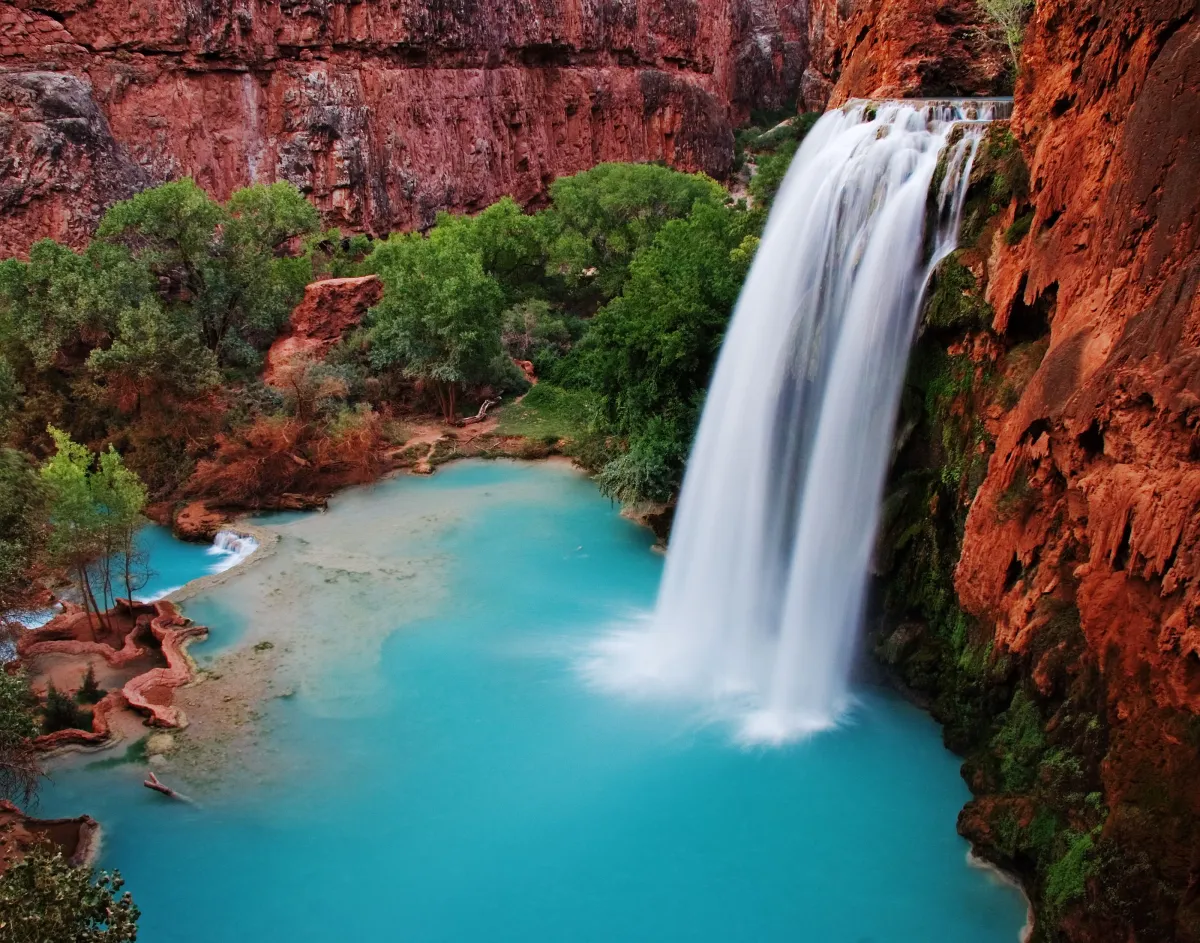 Photo: Havasu Falls, via i.pinimg.com
For residents, the mule mail route is not a novelty. It's infrastructure. Medications arrive by mule. Legal documents arrive by mule. School supplies, replacement parts, care packages from relatives living elsewhere — all of it comes down that trail. The romance that outside observers attach to the image of a mule carrying the mail is not particularly how it feels when you're waiting on something important and the delivery schedule is three days a week, weather permitting.
But there's something worth sitting with in the fact that this community has maintained continuity with a way of doing things that the rest of the country left behind more than a century ago — not out of nostalgia, but out of sheer geographic necessity.
The Postmark That Time Forgot
Letters mailed from Supai carry a postmark that stops people cold when they see it for the first time. The zip code is real. The post office is real. The mail carrier just happens to have four legs and a very patient disposition.
In a country that has spent the last several decades trying to automate, digitize, and optimize every possible logistical process, the Supai mule route stands as a reminder that geography doesn't always cooperate with progress. Some corners of America are simply beyond the reach of the infrastructure that everyone else takes for granted.
The mules don't know they're famous for this. They just know the trail, the weight of the bags, and the distance between the rim and the village below. Three days a week, they make the trip anyway. That's been enough for 128 years. It'll probably be enough tomorrow.