Buried Name, Borrowed Identity: The Midwestern Town That Grieved Itself and Then Came Back
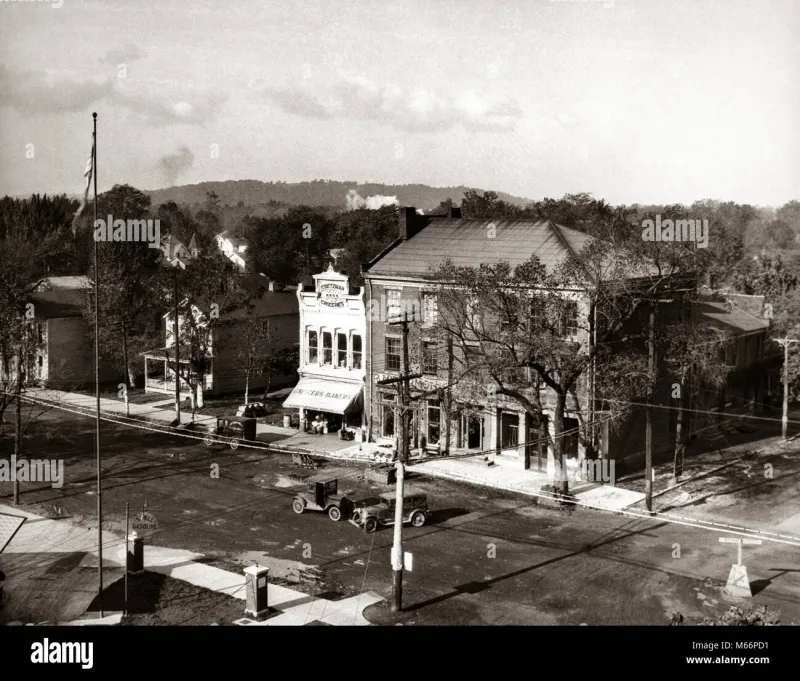
Photo: small Midwestern town square 1918 vintage community gathering historical, via c8.alamy.com
Most towns don't get to hold funerals for themselves. Most towns don't need to. But in the spring of 1918, in a small Midwestern community whose German immigrant founders had given it a name that suddenly felt dangerous to carry, residents gathered in the town square around an actual wooden coffin, listened to speeches, and watched their town's identity get lowered — symbolically, ceremonially, and with considerable solemnity — into the ground.
The new name they chose was aggressively American. It was also, by almost any measure, completely forgettable. And that, it turned out, was the problem that would haunt the community for the next several decades.
The Year America Went to War With Its Own Vocabulary
To understand what happened in that town square, you have to understand what 1918 felt like in communities across the American Midwest. The United States had entered World War I the previous year, and the wave of anti-German sentiment that followed was not a subtle cultural current — it was a full-force social pressure system that reshaped everything from restaurant menus to street signs to the names of the towns themselves.
Sauerkraut became liberty cabbage. German measles became liberty measles. Hamburgers were briefly rebranded as liberty sandwiches in some parts of the country. German-language newspapers shut down. German-language church services were abandoned. Families with German surnames anglicized them quietly, sometimes overnight, to avoid the suspicion and hostility that had become a feature of daily life.
For towns with German-derived names — and the Midwest had hundreds of them, settled by waves of German immigrants throughout the nineteenth century — the pressure was institutional as well as social. State councils of defense were actively encouraging, and in some cases effectively demanding, that communities with German-sounding names adopt more patriotically acceptable alternatives. The message was not subtle: your name is a liability. Change it.
The Coffin in the Square
What made this particular town's response unusual wasn't that they changed the name. Dozens of Midwestern communities did exactly that during the war years. What made it unusual was the ceremony.
Somebody — the historical record doesn't preserve exactly whose idea it was — decided that the renaming deserved to be marked with the kind of gravity it actually carried. If the town was going to bury its identity, it was going to do so properly. A wooden coffin was constructed. The old name was written on it in large letters. Speeches were delivered about patriotism and sacrifice and the necessity of demonstrating loyalty in visible ways. A local minister offered remarks. The coffin was lowered into a hole that had been dug in the town square.
Then the residents went home and started the awkward process of learning to call their town something else.
The Long Discomfort of a Borrowed Name
The new name stuck, in the technical sense that it appeared on maps and official documents and the letterheads of local businesses. But it never quite took hold in the way that a name takes hold when it grows organically from a place's history and character. Longtime residents continued to use the old name in private conversation. Older families, particularly those with German heritage, found the new name difficult to use without a faint sense of performance — as if they were reading from a script written by someone who didn't know the town.
The community divisions that the renaming exposed didn't heal cleanly when the war ended. There were residents who had genuinely believed the name change was necessary and right, who had felt the old name as an embarrassment during the war years, and who were not eager to revisit the question. There were others who had gone along with the ceremony under social pressure and resented it for years afterward. And there was a younger generation growing up who had been told a story about their town's founding that had a gap in it — a German chapter that the official name no longer acknowledged.
For decades, the town carried its borrowed identity with the particular unease of someone wearing clothes that fit but weren't theirs.
The Vote to Go Back
The push to restore the original name gathered momentum slowly, the way community movements tend to when they require people to admit that a collective decision made under duress was a mistake. It wasn't a clean argument. Restoring the German-derived name meant reopening conversations about what the renaming had meant, who had pushed for it, and what the community had actually lost in the process.
But by the time the restoration vote came before residents, the argument that won was a surprisingly simple one: the town's identity — its sense of its own history, its connection to the people who founded it — had been more damaged by the erasure than it ever could have been by the name itself. The wartime pressure that had made the German name feel dangerous was a historical artifact. The loss of continuity was ongoing.
The vote passed. The old name came back. There was no coffin this time, but there was a ceremony — smaller, quieter, and carrying the particular emotional texture of something being reclaimed rather than celebrated for the first time.
What Gets Lost When a Name Goes
The story of this town is not unique in its broad outline. Dozens of American communities changed their names during World War I, and a handful eventually changed them back. What makes this particular episode linger is the coffin — the fact that someone understood, even in 1918, that what was happening deserved to be mourned.
There's something almost archaeologically interesting about a community that buries its own name and then, generations later, decides to dig it back up. The name that came out of the ground wasn't exactly the same as the one that went in. It carried the weight of everything that had happened in the intervening decades — the discomfort, the divided loyalties, the quiet resentment, and eventually the strange pride that comes from reclaiming something that was nearly lost forever.
The town is still there. It uses its original name now. And if you visit on the right day and talk to the right people, you'll find residents who can tell you exactly where in the square the coffin was buried — which is, depending on how you look at it, either a piece of local trivia or the most honest piece of history the town has.