Dord, Dumbles, and the Dictionary Ghost: Everyday Words Born From Pure Error
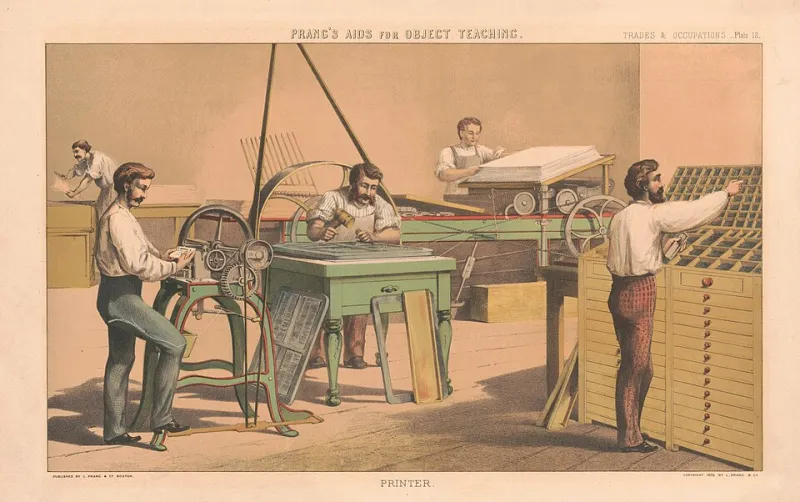
Photo: Unknown authorUnknown author, CC0, via Wikimedia Commons
The Word That Meant Nothing for Nine Years
In 1934, the massive second edition of Webster's New International Dictionary contained an entry for a word called "dord." It had a pronunciation, a part of speech (noun), and a definition: "density" in physics and chemistry.
There was just one problem. "Dord" is not a word. It never was.
The error traced back to a slip of paper submitted by a lexicographer's consultant — a note reading "D or d," meaning the letter could stand for either density or density's abbreviation. The note got misread as a single word, "Dord," and slipped into the pipeline. It survived proofing, printing, and publication, sitting confidently in one of the most authoritative reference works in the English language until an editor finally spotted it in 1939. Dictionaries don't really do recalls, so "dord" remains forever enshrined — as a famous example of a ghost word.
When Tired Monks Invent Vocabulary
Go back further and the errors get more charming. Medieval scribes copying manuscripts by candlelight made mistakes that later readers took as gospel. The word "apron" originally had no "n" — it was "a napron," from the French naperon. Over centuries of people mishearing where one word ended and the next began, "a napron" became "an apron." Linguists call this rebracketing, and it happened to "umpire" (from "a noumpere"), "nickname" (from "an ekename"), and "newt" (from "an ewte") too.
One exhausted copyist is often credited with giving us "dumbledore," an old word for a bumblebee, by mangling it in a manuscript — a word J.K. Rowling later dusted off for a certain headmaster, partly because she pictured him humming to himself like a bee.
The Printing Press's Sticky Fingerprints
The printing era industrialized error. Compositors working at speed routinely swapped letters, and some of their slips caught on. "Sweetheart" contracts, the legal world will tell you, occasionally became "sweetheart" deals through exactly this kind of carelessness. And the phrase "the whole nine yards" may owe its survival — though its origin is still debated — to typesetting quirks and miscounts that froze a fleeting expression into permanent idiom.
Why the Mistakes Stuck
Here's what makes these stories more than trivia: language doesn't have a correction department. Once enough people use a mistake, it stops being one. "Dord" failed that test and became a footnote. "Apron" passed, and now the "correct" original sounds wrong.
Every time you tie an apron, cheer for an umpire, or use a nickname, you're speaking a typo fluently. The dictionary isn't a record of perfect language — it's a museum of everything that stuck, including the accidents. And occasionally, like dord, even the ones that didn't.