Underwater for Eight Decades: The Camera That Crawled Out of a Lake With a Wedding Inside
Nobody Expected to Find a Wedding at the Bottom of a Lake
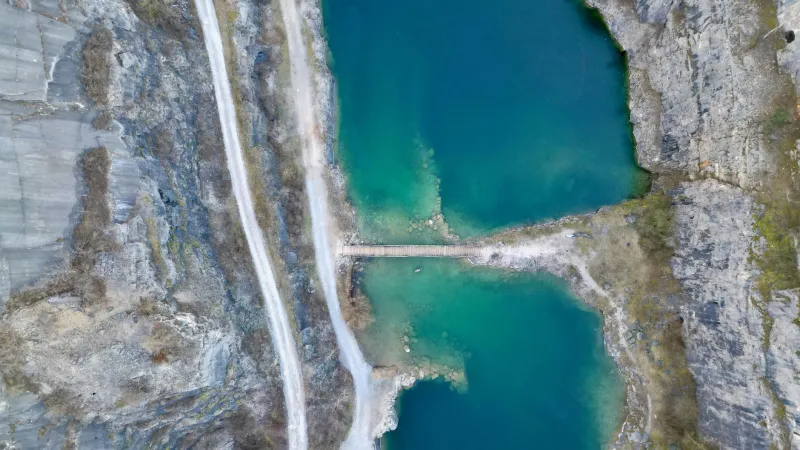
Construction dredging is not glamorous work. You're basically vacuuming the floor of a body of water, pulling up mud, debris, old tires, and the occasional piece of machinery that someone would rather forget. So when a dredge operator working on a lake infrastructure project in rural Indiana surfaced with a boxy, corroded lump that turned out to be a camera — a real, film-loaded camera — it wasn't immediately obvious that anything significant had happened.
It looked like junk. It kind of was junk. Except for what was still inside it.
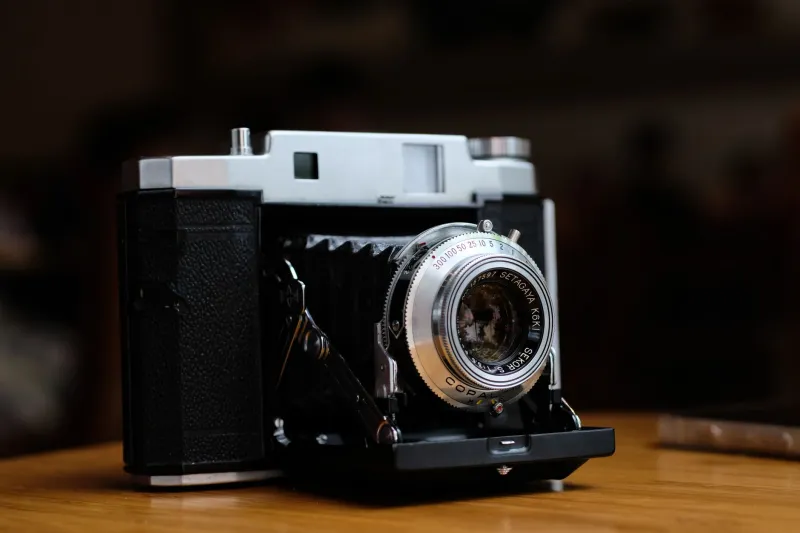
The camera, a mid-century folding model consistent with consumer equipment sold in the early 1940s, had spent somewhere between 75 and 85 years at the bottom of that lake. The outer casing had corroded badly. The leather had long since disintegrated. But the inner film chamber — sealed tightly as a matter of basic camera design — had done something nobody anticipated: it had held.
Not perfectly. Not cleanly. But enough.
Getting Film to Talk After Eight Decades of Silence
The camera ended up with a local historical society almost by accident. The crew chief on the dredging project had a vague instinct that throwing it in a dumpster felt wrong, so he passed it along to a county preservation office, which passed it along again until it landed with someone who knew what they were looking at.
Processing antique film is not a straightforward proposition under the best circumstances. Processing antique film that spent most of a human lifetime submerged in freshwater silt is a different challenge entirely. Specialists in photographic conservation — a surprisingly active field — warn that expectations in these situations should be minimal. Water intrusion, chemical degradation, and simple time tend to reduce old film to a brownish smear of nothing.
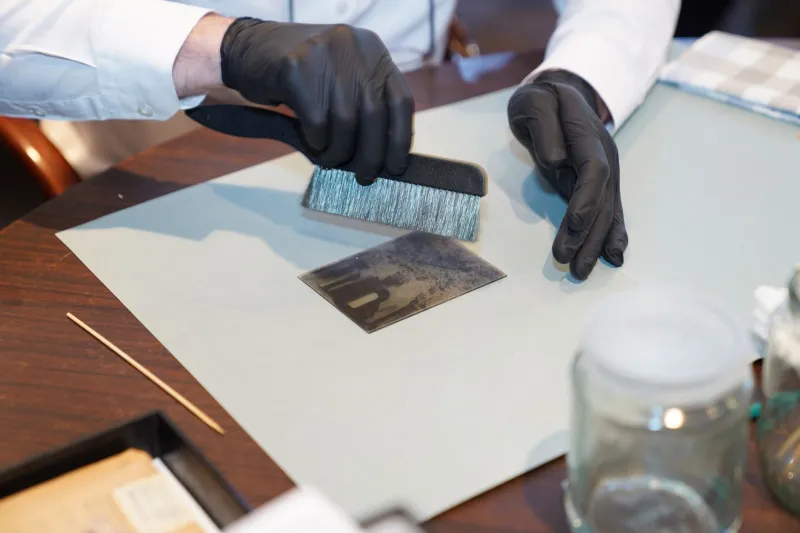
But the sealed chamber had done its job. When conservators carefully opened the camera and extracted the roll under controlled conditions, they found something remarkable: partial image retention on several frames. Not all of them. Not even most of them. But enough frames survived the decades to be coaxed back into legibility through careful darkroom work and digital enhancement.
What emerged from those frames was unmistakable: a wedding.
The Images Themselves
The photographs showed a ceremony, almost certainly outdoors, with a small group of attendees dressed in styles consistent with the early-to-mid 1940s. A bride in a simple white dress. A groom in what appeared to be a dress uniform. Guests arranged in that slightly stiff, self-conscious way that people stand when they know a camera is pointed at them and film costs money.
The images were incomplete, fragmentary, and in places barely legible. But they were real. And they showed a marriage.
What made those images matter beyond their visual novelty was what they represented as documentation — because as researchers began trying to identify who was in them, they ran into a story that explained exactly why the photographs had never been seen before.
The Courthouse Fire and the Marriage That Disappeared
County courthouse fires are a recurring disaster in American records history. They happened more often than most people realize, and when they did, the civil documentation stored inside — birth records, death certificates, property deeds, marriage licenses — went with them. Entire legal identities could be partially erased by a single bad night.
In this case, a courthouse fire in the same county in the late 1940s had destroyed a portion of the marriage records for that period. Among the records lost: the license for a couple whose descendants had spent decades trying to formally document that their grandparents had actually been legally married.
The reasons that documentation mattered had evolved over time — from inheritance questions in earlier decades to, more recently, a family effort to simply establish an accurate genealogical record. Without the license, and without any surviving photographs, the marriage existed only in family memory and a handful of written references that weren't considered legally sufficient proof.
The camera changed that. Forensic comparison of the images with surviving photographs of the couple — found in family collections after researchers made a public appeal — provided a strong visual match. The dress uniform in the photographs matched the branch of service and approximate period of the groom's military records, which had survived in federal archives. The outdoor setting matched descriptions given by elderly relatives who remembered attending the ceremony.
It wasn't a marriage certificate. But it was something. And in the context of everything else that had been assembled, it was enough to satisfy the historical record and give the family the documentation they'd been looking for.
How Does Film Survive That Long Underwater?
The honest answer is: usually it doesn't. The fact that any usable images survived from this camera is genuinely unusual, and conservators who worked on the project were candid about the role of luck.
The specific chemistry of the lake — low acidity, relatively low oxygen in the deeper sediment layers — may have slowed degradation. The folding camera's design created a tighter seal than many contemporary models. The film itself, a slower-speed emulsion typical of the era, may have been more physically stable than modern high-speed stocks.
Or it was just fortunate. Sometimes things survive that shouldn't, and the explanation is less satisfying than the result.
What a Camera at the Bottom of a Lake Actually Tells Us
There's something almost poetic about the whole chain of events here — a camera dropped into a lake (presumably by accident, though no one will ever know for certain), sitting in the dark and the cold for eight decades, surfacing at exactly the moment when the people who needed what was inside it were still around to use it.
The family in question has since donated copies of the enhanced images to the county historical society. The originals are preserved in archival storage. The camera itself is on display.
And somewhere at the bottom of that same lake, in all probability, there are other things sitting in the dark. Waiting for the right dredge, the right crew chief with the right instinct, and the right person on the other end of the chain who knows what to do with what comes up.
This time, it worked out.