Cold Case, Warm Keys: The Thrift Store Typewriter That Unraveled a Forty-Year Mystery
The Machine Nobody Wanted
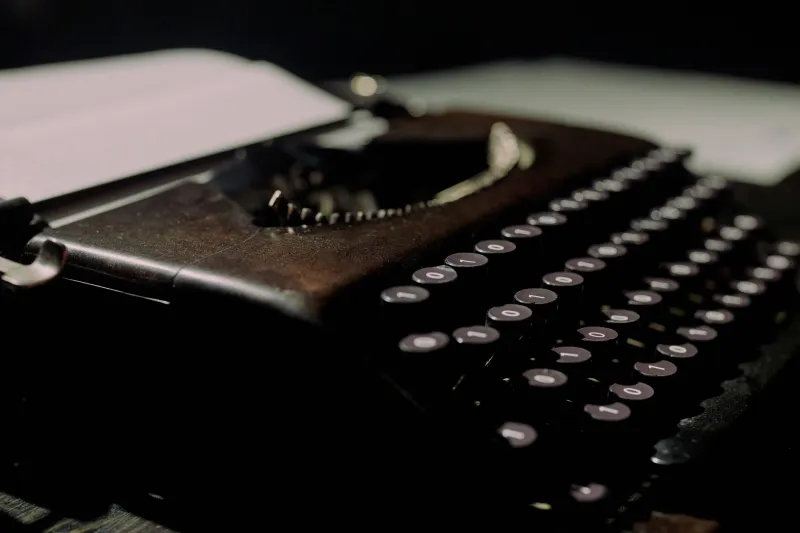
Sometime in the early 1990s, a dusty typewriter landed on a folding table inside a Goodwill store somewhere in the mid-Atlantic United States. Nobody knows exactly who dropped it off. The donation tag said nothing useful. The machine itself — a battered manual model from the 1950s — had sticky keys, a worn platen, and a ribbon so dry it could barely leave a mark. It sold for three dollars.
For most of the decade, that typewriter bounced between garage sales and storage units, completely unremarkable. What nobody realized was that it had a story to tell. A very specific, very damning one.
A Case That Went Nowhere for Decades
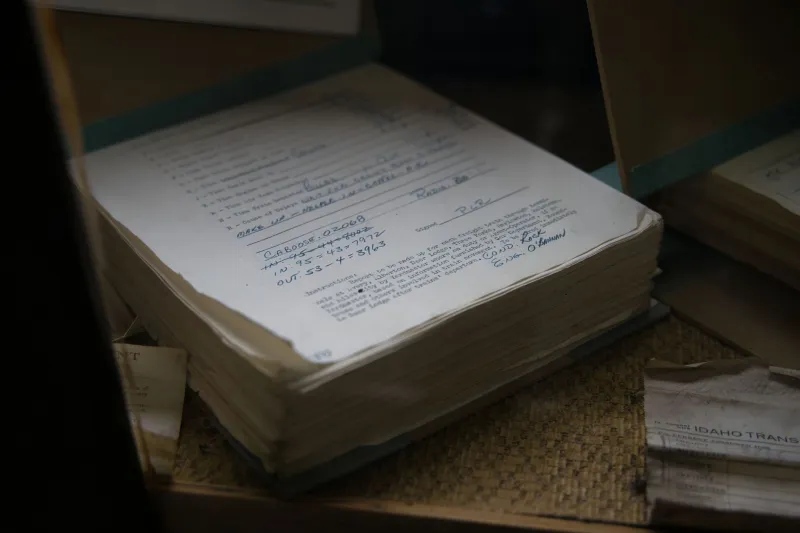
In the mid-1950s, a family in rural Pennsylvania received a ransom note. The details of the case — names, victim, outcome — remain sensitive territory, but the broad strokes have been confirmed through court documents and law enforcement records: the notes were typed, the crime was violent, and despite a vigorous initial investigation, the case went cold within a few years. The perpetrator was never identified. The notes were preserved as evidence, filed away, and eventually almost forgotten.
Decades passed. The detectives who originally worked the case retired or died. The files were transferred, reorganized, and transferred again. By the time the 1990s arrived, the case existed mostly as a cautionary tale about the limits of mid-century forensic science. There were no fingerprints worth analyzing. There were no witnesses who hadn't already been interviewed. There was, essentially, nothing left to work with.
Except the notes themselves.
What a Typewriter Leaves Behind
Here's something most people don't know about old manual typewriters: every single machine is slightly different. Manufacturing tolerances in the mid-twentieth century were nowhere near what modern machining achieves, which means that even two typewriters that rolled off the same assembly line on the same day would produce subtly distinct output. A letter might sit fractionally higher than its neighbors. A particular key might strike with more pressure on one side. Over years of use, these quirks compound — gears wear unevenly, hammers bend microscopically, alignment drifts.
Forensic document examiners have understood this in principle for a long time, but applying it to a cold case requires something that most investigations simply don't have: the original machine.
In this case, an observant detective — working a completely unrelated property crime in the late 1990s — happened to come across the typewriter at an estate sale. Something about it caught his eye. He'd recently been reviewing old case files as part of a departmental archiving project, and he'd spent an unusual amount of time staring at the ransom notes. He recognized, almost unconsciously, a particular quirk in the letter spacing. The lowercase "e" sat slightly elevated. The "r" struck harder on the left serif than the right.
He bought the typewriter for five dollars and brought it to the lab.
The Analysis
Forensic document examiners ran the typewriter through a battery of tests. They produced sample pages under controlled conditions — same paper weight, same strike pressure — and compared the output against photographs of the original ransom notes under magnification.
The match was, by the examiners' own description, extraordinary.
At least eleven distinct mechanical characteristics aligned between the typewriter's output and the decades-old notes. The elevated "e." The asymmetric "r." A consistent gap between certain letter pairs that suggested a worn escapement mechanism. A slight downward drift on lines longer than forty characters, indicating a tension spring that had been losing elasticity for years before the notes were even written.
This wasn't circumstantial. This was the machine. The actual machine that produced the actual ransom notes.
Tracing It Back
From there, investigators worked backward through the typewriter's ownership history. Estate sale records. Pawn shop logs. A receipt from a church rummage sale in 1987. Gradually, painstakingly, they reconstructed a chain of custody that led back to a specific address — and a specific name attached to that address — from the 1950s.
The individual in question had died years earlier, which meant no prosecution was ever going to happen. But the identification was made. The case was officially closed. A family that had waited four decades for an answer finally got one.
Why This Story Matters
It's tempting to frame this as a feel-good story about persistence paying off, but the more unsettling reading is this: the evidence was never really gone. It was sitting in a thrift store. It was on a folding table with a three-dollar price tag. It traveled through garage sales and storage units and estate boxes for years while the case it could have cracked sat dormant in a filing cabinet.
The only thing that connected those two realities was a detective who happened to be paying attention on a day when he could have just as easily walked past.
Forensic technology has advanced enormously since then. Digital imaging, AI-assisted pattern matching, and high-resolution scanning have made typewriter analysis faster and more reliable than ever. But none of that technology matters if nobody thinks to look at the machine in the first place.
Sometimes the most important investigative tool isn't the equipment. It's the person willing to stop and ask why that lowercase "e" looks a little off.