Thirty Seconds of Static That Caught a Ghost: The Gas Station Tape the FBI Couldn't Ignore
There's a particular kind of irony in the fact that one of the most significant pieces of surveillance footage in a decades-long federal manhunt was recorded by someone who thought they were taping over last Tuesday's slow shift at a gas station outside Kearney, Nebraska.
And yet, here we are.
Just Another Wednesday Night in the Middle of Nowhere
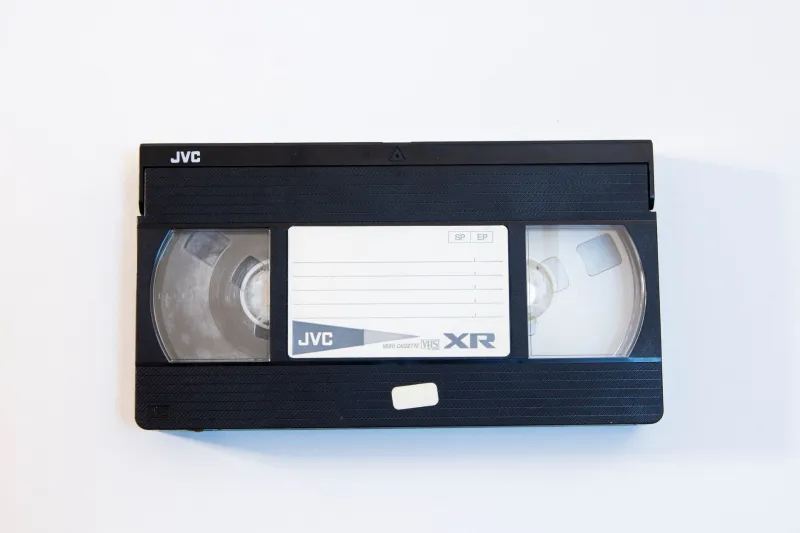
In the early 1990s, most small businesses in rural America treated their security cameras the way most people treated their answering machines — necessary, vaguely annoying, and not something you thought too hard about. The system was simple: one VHS tape per week, recorded over and over until the picture got too fuzzy to bother with. Then you swapped it out, maybe kept the old one in a shoebox, maybe tossed it.
The clerk working the overnight shift at a small independent gas station along a stretch of Highway 30 in central Nebraska was not thinking about federal fugitives. He was thinking about the fact that the coffee machine was broken and that his relief was forty minutes late. The camera above the register hummed along in the background, doing its thing, pointed at the door the way it always was.
Sometime between 11 p.m. and midnight, a man walked in, bought a bottle of water and a road atlas, paid cash, and left. Thirty seconds, maybe forty. The clerk barely looked up.
The tape kept rolling.
The Cold Case That Wouldn't Close
The FBI's fugitive division keeps files on people who have a way of disappearing so completely that years turn into decades without a single confirmed sighting. These aren't the high-profile cases that make the evening news every few months — these are the ones that sit in filing cabinets and get reviewed by agents who weren't even born when the original warrant was issued.
The man federal investigators had been tracking since the mid-1980s had been connected to a string of financial crimes and at least one violent incident that crossed state lines, giving the Bureau jurisdiction and motivation to keep the case technically open. But open cases and active leads are two different things, and by the mid-1990s, this particular file had gone cold in the way that only decade-old paper trails can.
He had last been confirmed in the Southwest. There were unverified tips placing him in Canada. One agent had spent two years chasing a lead through Central America that turned out to be a dead end involving a completely different person with a similar name. The file sat. The case didn't close, but it didn't move, either.
The Shoebox That Changed Everything
Here's where the story gets genuinely strange.
The gas station changed hands in 1998, and then again in 2003. When the second new owner did a cleanout of the back storage room, he found a cardboard box full of old VHS tapes, all unlabeled except for handwritten dates in marker that had faded to near-illegibility. He kept them, the way people keep things they can't immediately justify throwing away. They sat in his garage for years.
In 2009, a regional FBI field office began a systematic effort to revisit cold cases using newly available digital forensic tools — specifically, software capable of enhancing and stabilizing analog video footage that would have been essentially useless to investigators fifteen years earlier. The technology had advanced far enough that grainy, degraded VHS recordings could be processed frame by frame, sharpened, and cross-referenced against facial recognition databases that simply hadn't existed when the original crimes were committed.
The Bureau put out a quiet, localized call to businesses along known travel corridors asking whether anyone had retained old security footage from the late 1990s and early 2000s. It was a long shot — a genuinely absurd long shot, if we're being honest — and most of the responses they got back were people explaining that they'd thrown everything away years ago.
The garage owner in Kearney called because he wasn't sure if his tapes counted, but figured it couldn't hurt to ask.
What the Software Found
Digital forensic analysts spent weeks processing the box of tapes, most of which yielded nothing useful — blurry footage of empty aisles, the occasional late-night customer whose face never turned toward the camera, long stretches of a parking lot with nothing in it.
And then, on one tape, on one unremarkable night in what the faded label suggested was sometime in 1996 or 1997, a man walked into the frame and stood at the counter for thirty-seven seconds.
The enhancement process took time. The original footage was degraded enough that the man's face was little more than a smear of pixels. But the software worked through it — stabilizing the image, reconstructing detail from surrounding frames, gradually assembling something coherent from what had looked like noise.
The resulting image was not perfect. It was never going to be perfect. But it was enough to run through the facial recognition system, and what came back gave investigators the first confirmed sighting of their fugitive in over a decade.
More importantly, the road atlas he'd purchased suggested a travel direction. Combined with other contextual details in the footage — the make and partial plate of a vehicle visible through the window — investigators had a thread to pull.
The Part That Sticks With You
The case didn't resolve overnight. It rarely does. But the footage provided the anchor point investigators needed to reconstruct a timeline and eventually close the gap.
What makes the story worth sitting with isn't just the outcome. It's the sheer accidental nature of every link in the chain. A clerk who didn't look up. A tape that wasn't thrown away. A box that survived two property sales and a garage cleanout. A long-shot inquiry that someone actually bothered to respond to. Software that didn't exist when the crime happened.
Take any one of those links out, and the tape is landfill somewhere in central Nebraska.
The gas station is a different business now. The camera above the door is digital, feeds directly to a cloud server, and keeps ninety days of footage automatically. Nobody has to think about it.
Somewhere in a federal archive, the enhanced still from that VHS tape sits in a closed case file. Thirty-seven seconds of a man buying water and a road atlas, recorded by someone who had no idea what they were seeing.