Double Lightning Strike: The Man Who Cheated Nuclear Death Twice in Nine Days
When Lightning Strikes Twice
Imagine surviving the most devastating weapon ever used in warfare, only to walk straight into it happening again three days later. That's exactly what happened to Tsutomu Yamaguchi, a Japanese naval engineer whose story sounds like something from a science fiction novel — except it's documented history.
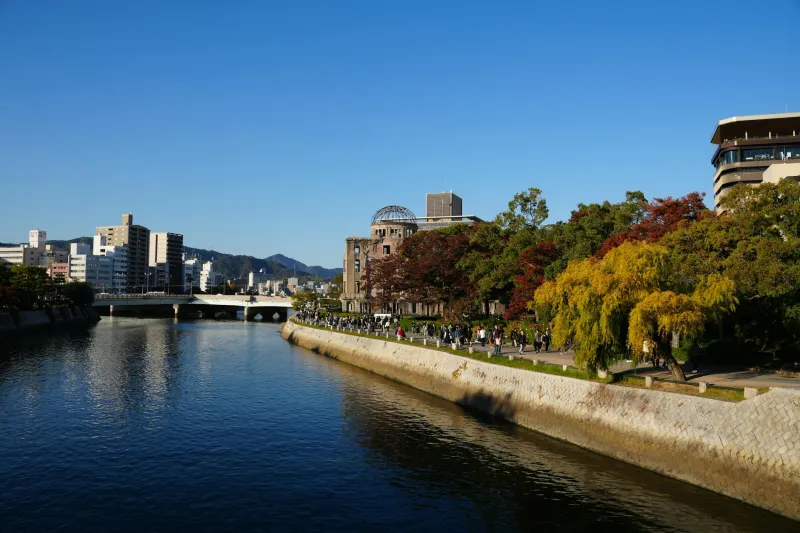
On August 6, 1945, Yamaguchi was wrapping up a three-month business trip in Hiroshima for Mitsubishi Heavy Industries. He was walking to the shipyard when a blinding flash lit up the morning sky. The world's first combat atomic bomb had just detonated less than two miles away.
The First Brush with Nuclear Hell
The blast threw Yamaguchi to the ground, temporarily blinded him, and left him with severe burns on his left side. But he was alive — one of roughly 80,000 people who survived that day in a city where 140,000 would eventually die from the bombing.
What happened next defies all logic. Instead of staying put or seeking refuge elsewhere, Yamaguchi did what seemed impossible: he went home. Home happened to be Nagasaki, 180 miles southwest.
After spending a night in an air raid shelter in Hiroshima, Yamaguchi caught one of the few trains still running and made the grueling journey back to his family. He arrived on August 8, bandaged and traumatized, with stories his relatives could barely believe.
Lightning Strikes Again
On the morning of August 9, despite his injuries, Yamaguchi reported to his office at Mitsubishi's Nagasaki shipyard. He was telling his supervisor about the Hiroshima bombing — describing the massive explosion and the strange mushroom-shaped cloud — when his boss interrupted him.
"You're crazy," his supervisor said. "One plane cannot destroy a whole city."
At that exact moment, at 11:02 AM, the second atomic bomb detonated over Nagasaki.
This time, Yamaguchi was about two miles from ground zero. The blast knocked him unconscious, reopened his wounds, and left him temporarily deaf. But once again, impossibly, he survived.
The Mathematics of Impossibility
The odds of what happened to Yamaguchi are almost incomprehensible. Of Japan's roughly 72 million people in 1945, he was one of perhaps 165 individuals who were in both cities during the bombings. But he's the only person officially recognized by the Japanese government as a survivor of both attacks.
Statisticians have tried to calculate the probability. Being in Hiroshima during the bombing and surviving put him in roughly a 1-in-900,000 category. Then being in Nagasaki three days later and surviving again? The numbers become astronomical — somewhere in the range of 1 in several billion.
A Life Haunted by History
Yamaguchi lived with the physical and psychological scars for the rest of his life. The radiation exposure left him with lasting health problems, and he lost hearing in one ear permanently. His wife and infant son were also exposed to radiation in Nagasaki, though they survived.
For decades, he rarely spoke about his experience. In Japan's post-war culture, atomic bomb survivors (called hibakusha) often faced discrimination. Many employers wouldn't hire them, and some people feared that radiation exposure was contagious or hereditary.
Speaking Out
It wasn't until his later years that Yamaguchi became an advocate for nuclear disarmament. He traveled internationally, sharing his story and calling for the elimination of nuclear weapons. In 2009, at age 90, he met with director James Cameron, who was considering making a film about his experience.
"The reason I hate the atomic bomb is because of what it does to the dignity of human beings," Yamaguchi said in one of his final interviews.
The Ultimate Paradox
Yamaguchi died in 2010 at age 93 — not from radiation-related illness, but from stomach cancer unrelated to his atomic bomb exposure. He had outlived most of his contemporaries and witnessed Japan transform from a devastated nation into a modern democracy.
His story forces us to confront an uncomfortable truth about chance and survival. In a world where we like to believe that good things happen to good people and that we control our own destiny, Yamaguchi's experience reminds us that sometimes history chooses us — twice.
The man who should have died on August 6, 1945, instead became living proof that even in humanity's darkest moments, the impossible sometimes happens. He was the unluckiest man alive, and also the luckiest — a walking contradiction that survived to tell one of the most improbable stories in human history.