The Testimony That Came From Beyond the Grave
In the annals of American jurisprudence, few moments are as bizarre as what happened in a Pueblo, Colorado courtroom in 1897. The prosecution was confident they had an airtight murder case. The defense seemed doomed. Then the victim himself was called to testify—or rather, what remained of him.
The case of People v. Buchanan would become legendary not for its legal precedents, but for the moment when a corpse became the most credible witness in the room.
A Death That Didn't Add Up
The trouble began when railroad worker James McDonald was found dead near the tracks outside Pueblo. The circumstances seemed straightforward: McDonald had been shot twice in the chest at close range. The prime suspect was his coworker and drinking companion, Thomas Buchanan, who had been seen arguing with McDonald hours before the body was discovered.
The prosecution's theory was simple and compelling. Buchanan had confronted McDonald during a heated dispute over money. In a fit of rage, Buchanan had drawn his pistol and shot McDonald twice in the chest from approximately three feet away. The powder burns on McDonald's shirt seemed to confirm the close-range shooting.
Buchanan maintained his innocence, claiming he had left McDonald alive and well after their argument. But the physical evidence seemed overwhelming. The prosecution had eyewitnesses who heard the argument, they had the murder weapon found near Buchanan's boarding house, and they had what appeared to be clear forensic evidence of a close-range shooting.
When Science Meets Courtroom Drama
Buchanan's defense attorney, a young lawyer named Samuel Morrison, had studied the emerging field of forensic pathology. Something about the prosecution's timeline bothered him. If Buchanan had shot McDonald at close range during their evening argument, certain physical evidence should be present on the body.
Morrison requested permission to exhume McDonald's body for a more thorough examination. The judge, skeptical but curious about these new scientific methods, granted the unusual request. What happened next would change how American courts viewed physical evidence.
When the local doctor examined McDonald's remains more carefully, he made a startling discovery. The bullet wounds showed none of the tissue damage or blood coagulation patterns consistent with shots fired at a living person. Instead, the wounds appeared to have been inflicted several hours after death had already occurred.
Even more damning to the prosecution's case: McDonald's stomach contents revealed he had died from acute alcohol poisoning, not gunshot wounds.
The Corpse Takes the Stand
In an unprecedented move, Judge William Harrison allowed McDonald's body to be brought into the courtroom as physical evidence. The sight of the deceased victim laid out before the jury was macabre, but the forensic evidence was undeniable.
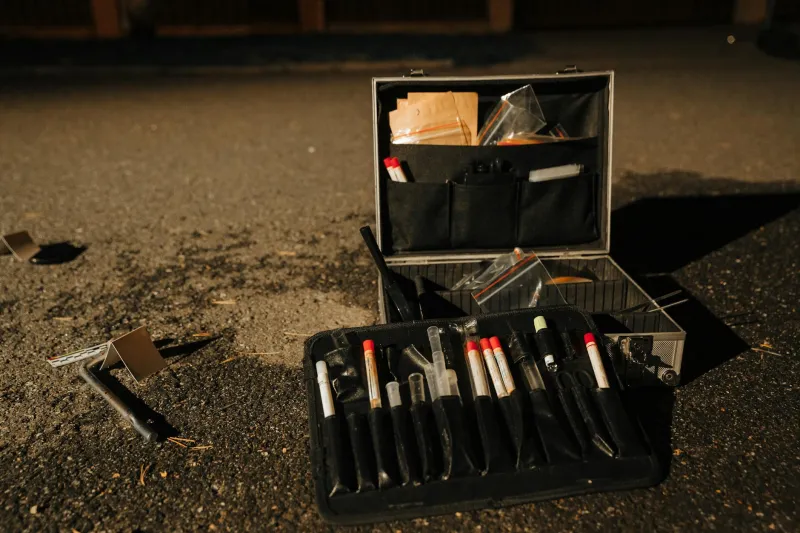
Dr. Henry Richardson, who had performed the post-mortem examination, used the corpse to demonstrate his findings to the jury. He showed how the bullet wounds lacked the characteristic tearing and blood infiltration that occurs when bullets strike living tissue. The wounds were clean and showed signs of having been made in dead flesh.
More importantly, Richardson's examination of McDonald's internal organs revealed fatal levels of alcohol in his system. McDonald had quite literally drunk himself to death hours before anyone shot him.
Reconstructing a Crime That Never Happened
As the forensic evidence mounted, a very different story emerged. McDonald had indeed argued with Buchanan, but he had survived that confrontation. After Buchanan left, McDonald had continued drinking alone, eventually consuming enough alcohol to kill him.
Someone—possibly hoping to cover up their own involvement in McDonald's death, or perhaps trying to frame Buchanan—had discovered the body and shot it twice to make it appear as though McDonald had been murdered.
The prosecution's entire case collapsed. They had built their theory around a murder that never occurred, trying to convict a man for killing someone who had already been dead for hours.
The Science That Changed Everything
The Buchanan case became a landmark in American forensic pathology. It demonstrated that physical evidence could not only corroborate witness testimony—it could completely contradict it. The case established important precedents for the admissibility of forensic evidence in criminal trials.
Dr. Richardson's testimony about post-mortem bullet wounds became required reading in medical schools across the country. His techniques for determining time of death through examination of stomach contents and tissue decomposition were adopted by coroners nationwide.
The case also highlighted the importance of thorough forensic examination. Had Morrison not insisted on exhuming the body, Buchanan would likely have been convicted and executed for a crime that existed only in the prosecution's imagination.
Justice From the Grave
The jury deliberated for less than two hours before returning a not guilty verdict. Buchanan walked free, vindicated by the testimony of the man he had allegedly murdered.
The real killer—whoever had shot McDonald's corpse in an attempt to stage a murder scene—was never identified. The case remains officially unsolved, though historians suspect the shots were fired by someone hoping to collect a reward offered for information leading to Buchanan's conviction.
Judge Harrison's decision to allow the corpse into the courtroom was controversial at the time, but it established important precedents for the use of physical evidence in criminal trials. The case helped legitimize forensic pathology as a scientific discipline and demonstrated that dead bodies could indeed tell their own stories.
The Legacy of Silent Testimony
The Buchanan case occurred during a pivotal moment in American criminal justice, when courts were beginning to embrace scientific methods of investigation. The dramatic image of McDonald's corpse "testifying" on behalf of the accused captured public imagination and helped establish forensic evidence as a crucial component of modern criminal trials.
Today, the techniques pioneered by Dr. Richardson are standard practice in forensic pathology. The ability to determine whether wounds were inflicted before or after death is fundamental to modern criminal investigations. Time-of-death determinations through examination of stomach contents and tissue decomposition are routine procedures in coroner's offices across the country.
When the Dead Speak Louder Than the Living
The case of People v. Buchanan remains unique in American legal history—not just for its bizarre courtroom theatrics, but for what it revealed about the power of scientific evidence to overturn seemingly ironclad prosecutions.
In an era when eyewitness testimony was considered the gold standard of evidence, McDonald's corpse proved that sometimes the most reliable witness is the one who can't speak at all. The dead man's body told a story that contradicted everything the living witnesses claimed to have seen.
It was a lesson that would reshape American criminal justice: when science and testimony conflict, trust the science. Sometimes the most important testimony comes not from what people remember seeing, but from what the physical evidence proves actually happened.
In the end, James McDonald got justice—not through the conviction of his alleged killer, but through the revelation that he hadn't been killed at all. His body's silent testimony saved an innocent man's life and helped establish the scientific principles that continue to guide forensic investigations today.