Special Delivery: The POW Who Shipped Himself to Freedom in a Wooden Box
The Most Unlikely Escape Route
When you think of daring World War II prison escapes, images of tunnels, disguises, and midnight fence-cutting probably come to mind. What doesn't come to mind is the postal service. Yet for one Allied soldier, the difference between captivity and freedom came down to proper packaging and a convincing return address.
In 1943, Flight Lieutenant William Ash found himself in Stalag Luft III, the same German POW camp that would later become famous for "The Great Escape." Unlike his fellow prisoners who were busy digging tunnels, Ash had his eye on something far more audacious: the camp's mail system.
When the Mail System Becomes Your Getaway Car
The idea struck Ash during one of his many observations of camp operations. He noticed that Red Cross packages and other large shipments regularly moved in and out of the facility with minimal inspection. The German guards were meticulous about checking incoming mail for contraband, but outgoing packages? Those received far less scrutiny.
Ash began studying the shipping procedures with the dedication of a logistics expert. He memorized guard rotations, noted peak shipping times, and most importantly, identified the exact specifications for packages that warranted the least attention. What he discovered was that wooden crates measuring roughly 6 feet by 3 feet by 2 feet were common enough to blend in, yet large enough to accommodate a very determined passenger.
The Devil in the Details
The plan required more than just hiding in a box. Ash needed to create a legitimate reason for such a large package to leave the camp. Working with fellow prisoners, he crafted an elaborate backstory involving "damaged musical instruments" that needed to be shipped to a repair facility in neutral Switzerland.
The paperwork alone took weeks to perfect. Every form had to be filled out in flawless German, complete with official stamps that the prisoners had painstakingly forged using makeshift tools. They even created fake correspondence from the Swiss "repair shop" requesting the damaged goods.
But the most crucial element was timing. Ash calculated that he would need to remain motionless in the crate for potentially 12-15 hours, accounting for processing time, transport to the train station, and the initial leg of the journey. He practiced lying still for hours at a time, training his body to function on minimal oxygen and suppressing every natural urge to move or cough.
Shipping Day
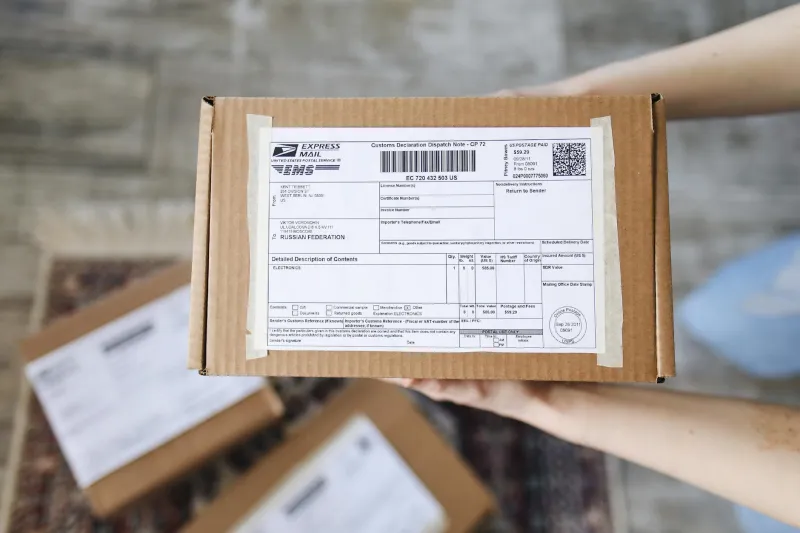
On the morning of the escape, Ash's fellow prisoners executed their plan with military precision. While some created distractions around the camp, others loaded the crate onto the outgoing mail cart. The shipping label, written in perfect German script, declared the contents as "Reparaturbedürftige Musikinstrumente" (Musical Instruments Requiring Repair).
Inside the crate, Ash lay perfectly still as German guards casually inspected the day's outgoing mail. He could hear their voices just inches from his hiding spot, discussing everything from the weather to their weekend plans. At one point, a guard actually sat on the crate to rest, unknowingly using a human being as a bench.
The Journey Nobody Expected
What happened next defied every assumption about German efficiency. The crate was loaded onto a train bound for Switzerland, but due to wartime rail disruptions, it was rerouted three different times. What should have been a 6-hour journey stretched into a 27-hour odyssey across half of occupied Europe.
Ash later described the experience as "the longest meditation session in military history." He couldn't move, couldn't speak, and couldn't even be certain he was heading in the right direction. At various stops, he heard German, French, and finally—miraculously—Swiss German being spoken by railway workers.
Special Delivery to Freedom
When the crate finally arrived at a Swiss railway depot, workers were puzzled by the unusual shipment. The paperwork seemed legitimate, but something felt off about the weight distribution. When they pried open the lid expecting to find broken violins and damaged horns, they instead discovered a very cramped, very grateful British flight lieutenant.
Swiss authorities initially suspected an elaborate German trick, but Ash's knowledge of recent Allied operations quickly convinced them of his authenticity. Within days, he was debriefed by British intelligence and eventually returned to England, where his escape method became the stuff of legend.
Why This Story Sounds Impossible
The idea that someone could mail themselves to freedom sounds like the plot of a cartoon, not a real wartime escape. The logistics alone seem insurmountable: creating convincing paperwork, timing the shipment perfectly, surviving nearly 30 hours in a wooden box, and relying on enemy postal workers to unknowingly facilitate your escape.
Yet Ash's escape worked precisely because it was so unexpected. German security was designed to prevent tunneling, fence-cutting, and disguised walkouts. Nobody thought to guard against the postal system becoming an escape route.
The story also highlights an ironic truth about wartime bureaucracy: even in the middle of the world's deadliest conflict, the mail still had to go through. The same German efficiency that made the camps so secure also created the systematic shipping procedures that Ash exploited.
Today, William Ash's escape stands as proof that sometimes the most outrageous plans succeed not despite their absurdity, but because of it. In a world where everyone expects you to dig your way out, sometimes the best strategy is to simply ask someone to ship you home.