When a Single Gunshot Nearly Rewrote North American History: The Pig That Almost Started a War
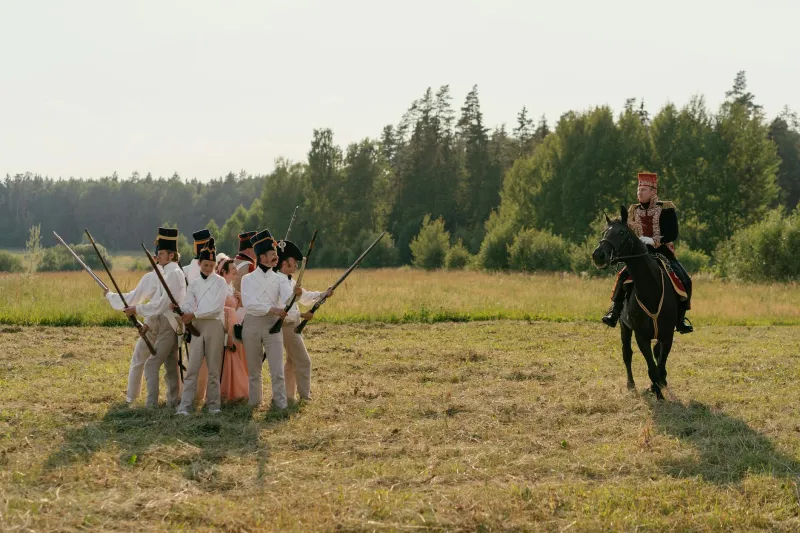
The Shot That Shook Two Nations
Picture this: It's a quiet morning in June 1859 on San Juan Island, a remote speck of land caught between what would become Washington State and British Columbia. American settler Lyman Cutlar steps into his potato garden to find a large black pig rooting through his crops — again. Fed up with the repeated raids on his vegetables, Cutlar grabs his rifle and shoots the pig dead.
What happened next sounds like something out of a satirical novel about diplomatic incompetence, but it's absolutely real: that single gunshot nearly triggered a full-scale war between the United States and the British Empire.
A Pig in the Wrong Place at the Wrong Time
The problem wasn't just that Cutlar had killed someone's livestock. The pig belonged to Charles Griffin, an employee of the Hudson's Bay Company, Britain's massive fur trading operation. And San Juan Island sat in disputed territory — both American settlers and British subjects lived there, but nobody could agree which country actually owned the place.
When Griffin demanded $100 in compensation (roughly $3,500 in today's money), Cutlar countered with an offer of $10. The dispute quickly escalated beyond two neighbors arguing over a dead pig. Griffin threatened to have Cutlar arrested by British authorities. Cutlar, knowing he'd likely face a British court where he'd have little chance of a fair hearing, refused to submit to arrest.
Word of the standoff reached American military officials, who saw an opportunity to assert U.S. claims to the island. They dispatched Captain George Pickett (yes, the same Pickett who would later lead the famous charge at Gettysburg) with 64 soldiers to protect American settlers.
Escalation Beyond All Reason
What should have been a simple property dispute now involved armed troops. The British responded predictably — they sent three warships to the area, bristling with cannons and carrying 2,140 men. The Americans weren't about to back down either. Soon, 461 American soldiers had dug in on the island, facing off against British naval forces across the narrow channel.
For weeks, tensions ratcheted higher. Both sides issued ultimatums. Military commanders on the ground seemed determined to fight, regardless of the absurd origins of their conflict. At one point, a British admiral ordered the Americans to abandon the island or face bombardment. The American commander replied that his men were ready to fight.
Two of the world's most powerful nations were about to go to war over a pig.
Cooler Heads and Unlikely Diplomats
Fortunately for everyone involved, news of the brewing crisis eventually reached officials in Washington D.C. and London who possessed more sense than their military commanders in the field. Both governments recognized the utter ridiculousness of fighting a war over livestock and quickly moved to defuse the situation.
General Winfield Scott, hero of the Mexican-American War, arrived to take charge of American forces. He immediately recognized that Captain Pickett had massively overreacted to what should have been a civil dispute. Scott negotiated a joint occupation agreement with British officials — both countries would station small garrisons on the island while diplomats worked out the broader territorial question.
The Most Peaceful War in History
For the next 12 years, American and British soldiers shared San Juan Island in what became the most cordial military occupation in history. The troops got along famously, often socializing, trading goods, and even celebrating each other's national holidays together. They competed in sports, shared meals, and developed genuine friendships.
The only casualties during this entire "war" were the original pig and one British soldier who accidentally shot himself in the foot.
A German Emperor Settles an American Dispute
The final resolution came in 1872, when both nations agreed to submit their territorial dispute to international arbitration. They chose German Kaiser Wilhelm I as the arbitrator — a curious choice that put a European monarch in charge of deciding the boundary between North America's two largest English-speaking nations.
After reviewing the evidence, Wilhelm ruled in favor of the United States. San Juan Island and the surrounding archipelago became American territory, where they remain today as part of Washington State.
The Pig That Changed History
The Pig War stands as perhaps the most absurd international crisis in modern history. A farmer's frustration with crop damage escalated into a military standoff involving thousands of troops and multiple warships, yet resulted in zero human casualties. It demonstrated both the hair-trigger tensions that could exist between nations in the 19th century and the power of diplomacy to resolve even the most ridiculous conflicts.
Today, San Juan Island National Historical Park commemorates this bizarre chapter in American and British history. Visitors can walk the grounds where soldiers once prepared for battle over a pig, a reminder that sometimes the most significant events in history begin with the most trivial causes.
Lyman Cutlar probably never imagined that his split-second decision to shoot a troublesome pig would nearly rewrite the map of North America. But in 1859, that's exactly what almost happened — proving once again that truth really is stranger than fiction.