Brain Rewired, Accent Acquired: The Medical Mystery That Changes How You Sound Overnight
Brain Rewired, Accent Acquired: The Medical Mystery That Changes How You Sound Overnight
Imagine waking up from surgery and discovering that your voice has betrayed you. You still know who you are, remember your life, recognize your family—but when you speak, a completely foreign accent emerges from your mouth. Your loved ones stare in confusion as you sound like a stranger wearing your face.
This isn't science fiction or psychological drama. It's Foreign Accent Syndrome (FAS), a rare neurological condition that can literally change how someone sounds overnight, transforming familiar voices into something unrecognizable and deeply unsettling.
When Dentistry Goes International
Karen Butler's story reads like medical fiction, but it's disturbingly real. In 2009, this Oregon woman went to her dentist for what should have been a routine procedure. She left the office speaking with a pronounced foreign accent that sounded vaguely Eastern European, Irish, or sometimes British, depending on who was listening.
Butler had never traveled extensively, never lived abroad, and had no particular exposure to foreign languages. Yet her American English had been replaced by something that made her sound like she'd immigrated from somewhere else entirely. The accent wasn't subtle—it was dramatic enough that strangers would ask about her background, assuming she was foreign-born.
The transformation wasn't voluntary or controllable. Butler couldn't switch back to her original voice no matter how hard she tried. She described feeling like a prisoner in her own mouth, forced to speak in a voice that felt completely alien while her brain insisted this was how she'd always sounded.
The Stroke That Rewrote Language
George Reynolds' case was even more dramatic. The Georgia man suffered a stroke in 2016 that not only gave him a foreign accent but seemed to unlock languages he'd never studied. After his brain injury, Reynolds began speaking with what doctors described as a mixture of Russian and Spanish inflections, despite having no background in either language.
Even stranger, Reynolds occasionally used words and phrases that sounded authentically foreign, though linguists couldn't definitively identify the specific languages. His brain appeared to be constructing speech patterns that resembled real foreign languages without any prior exposure or learning.
Reynolds' family described the experience as profoundly disorienting. The man they'd known for decades was still there mentally and emotionally, but his voice had become that of a complete stranger. Phone conversations became exercises in cognitive dissonance as familiar thoughts emerged in an unfamiliar accent.
The British Invasion of American Speech
Perhaps the most documented type of FAS involves Americans who develop British-sounding accents following brain injuries. Michelle Myers, an Arizona woman, has experienced this transformation multiple times following different medical episodes, each time emerging with a different foreign accent.
After one incident, Myers spoke with what sounded like an Irish accent. Following another medical episode, she developed what listeners described as a British accent. Most recently, she emerged from a medical crisis speaking with what sounded like an Australian accent. Each transformation was complete and involuntary, lasting for months or even years.
Myers' case is particularly puzzling because of its recurring nature. Most FAS patients experience the condition once, but Myers seems to be neurologically predisposed to accent changes following brain trauma. She's become an inadvertent expert on living with a voice that doesn't match her identity.
The Science Behind the Strangeness
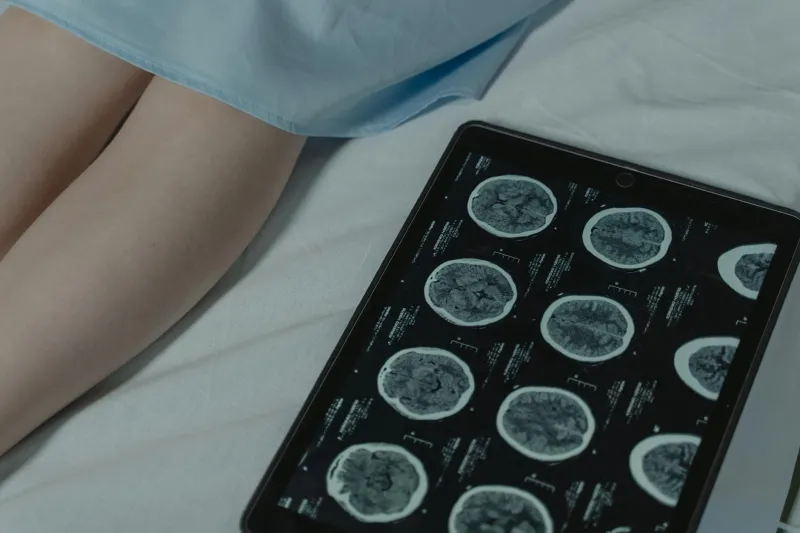
Neurologists believe FAS results from damage to specific areas of the brain responsible for speech motor control and language processing. The condition typically affects regions like Broca's area, which controls speech production, or neural pathways that coordinate the precise muscle movements required for articulation.
What makes FAS particularly fascinating is that patients aren't actually speaking foreign languages—they're producing altered versions of their native language that happen to sound foreign to listeners. The brain damage changes timing, rhythm, stress patterns, and vowel pronunciation in ways that coincidentally mimic foreign accents.
Dr. Jack Ryalls, a speech-language pathologist who has studied FAS extensively, explains that the condition reveals how incredibly precise our speech patterns are. Tiny changes in tongue placement, breathing patterns, or vocal timing can make someone sound like they're from an entirely different country, even when they're using the exact same vocabulary and grammar.
Living with a Borrowed Voice
The psychological impact of FAS extends far beyond the medical curiosity. Patients describe feeling disconnected from their own identity, as if their personality has been partially erased. Voice is intimately tied to self-perception, and when that changes dramatically, it can trigger profound identity crises.
Many FAS patients report that others treat them differently after developing the condition. Strangers make assumptions about their background, education, or social status based purely on their accent. Some patients feel like they're constantly performing a character they never auditioned for.
Family relationships can become strained as loved ones struggle to reconcile the familiar person with the unfamiliar voice. Children have reported feeling like their parent has been replaced by someone who looks the same but sounds completely different.
The Mystery Continues
Despite decades of research, FAS remains largely mysterious. Doctors can't predict who will develop the condition or what accent they might acquire. Some patients recover their original speech patterns over time, while others live with their new voices permanently.
Treatment options are limited. Speech therapy can sometimes help patients modify their altered speech patterns, but there's no cure that reliably restores original accents. Most patients eventually adapt to their new voices, though the adjustment process can take years.
The condition has been documented worldwide, with patients developing accents that don't match their geographic location or cultural background. Japanese patients have developed Korean-sounding accents, Germans have started speaking with French inflections, and Britons have emerged from brain injuries sounding American.
Identity in Translation
Foreign Accent Syndrome forces us to confront uncomfortable questions about the relationship between voice and identity. If someone sounds different, are they still the same person? How much of our sense of self is tied to how we sound to others?
For the roughly 100 documented cases worldwide, these aren't philosophical questions—they're daily realities. FAS patients must navigate a world where their voices don't match their histories, where every conversation becomes an opportunity for misunderstanding, and where the simple act of speaking can feel like wearing an elaborate disguise they can never remove.
In a medical landscape filled with conditions that affect movement, memory, and cognition, Foreign Accent Syndrome stands out as uniquely surreal. It's a reminder that the human brain remains largely mysterious, capable of rewiring itself in ways that transform the most basic aspects of human communication. Sometimes the most profound changes happen not in what we say, but in how we sound when we say it.