Return to Sender: The Ghost Letter That Took 53 Years to Find Its Way Home
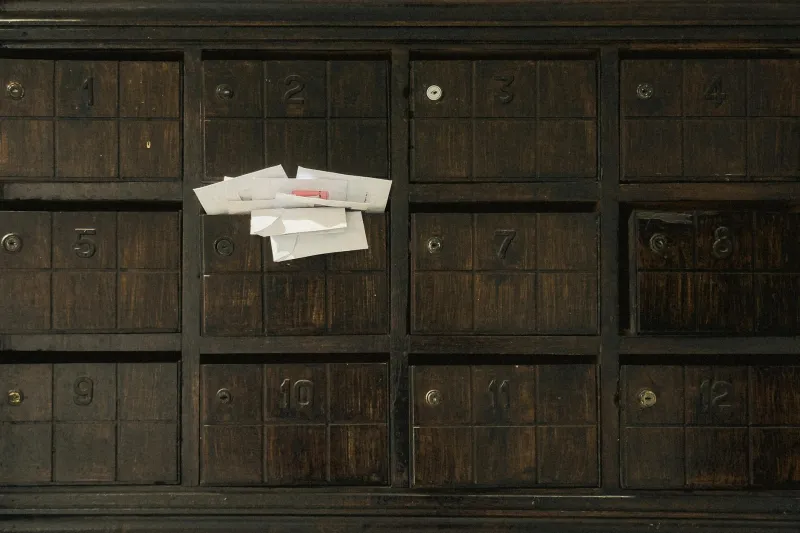
Neither Snow Nor Rain... Nor Five Decades
The unofficial motto of the United States Postal Service promises that neither snow nor rain nor heat nor gloom of night will stay couriers from their appointed rounds. But nobody mentioned what happens when a letter gets lost for 53 years and shows up after everyone involved is dead.
That's exactly what happened in rural Kentucky in 1979, when postal worker Martha Jenkins knocked on the door of a weathered farmhouse to deliver what appeared to be a routine piece of mail. The envelope was yellowed and brittle, the handwriting faded but still legible. The postmark read "December 3, 1926."
A Message from the Grave
The letter was addressed to William Henderson, a tobacco farmer who had lived at the address until his death in 1967. The return address showed it came from his brother Thomas, who had died even earlier, in 1954.
Martha Jenkins found herself in the surreal position of delivering a Christmas greeting from one dead man to another — more than half a century after it was mailed.
The current residents of the farmhouse, the Caldwell family, had purchased the property from Henderson's estate in 1970. They opened the letter (legally, since the addressee was deceased) and found a simple holiday card with a handwritten note: "Dear Willie, Hope you and Sarah have a blessed Christmas. The children are doing well. See you in the spring. Your brother, Tom."
The Postal Service's Greatest Mystery
How does a letter disappear for 53 years and then suddenly reappear? The postal service launched an investigation, but the trail was impossibly cold. The original post office where Thomas Henderson mailed the letter had been demolished in 1943. The sorting facility that should have processed it had been relocated twice.
The most likely explanation involved a structural renovation at a regional mail processing center in Louisville. Workers had discovered a cache of old mail that had somehow slipped behind machinery or fallen into an inaccessible space during the facility's construction in the 1920s.
America's Time Capsule Problem
The Henderson letter wasn't an isolated incident. The U.S. Postal Service estimates that millions of pieces of mail have been "significantly delayed" over the past century — some by decades.
In 1955, a batch of letters from 1918 was discovered in a sealed mail car that had been sitting on a railroad siding in Montana for 37 years. In 1982, renovation work at a Chicago post office uncovered thousands of pieces of mail from the 1930s that had somehow been walled up during a construction project.
Perhaps most eerily, in 1990, a New York woman received a love letter her husband had mailed to her in 1943 before shipping out to World War II. He had been killed in action in 1944. The letter arrived on what would have been their 50th wedding anniversary.
When Time Becomes Elastic
These delayed deliveries create a peculiar form of time travel — words written in one era arriving in another, carrying the hopes and concerns of people long gone. They're accidental time capsules that reveal how little and how much changes across decades.
The Henderson letter mentioned concerns about the tobacco crop and excitement about a new radio program. In 1926, those were immediate, pressing matters. By 1979, they read like messages from an alien world.
The Psychological Weight of Delayed Words
Mail delays of this magnitude force us to confront the strange relationship between communication and mortality. When we write a letter or send a card, we assume it will reach its destination while both sender and recipient are alive to appreciate it.
The Henderson family's letter violated that assumption in the most dramatic way possible. It became a ghost story told through the postal system — proof that our words can outlive us in ways we never intended.
The Undeliverable Dead Letter Office
For more than a century, the U.S. Postal Service operated what it called the "Dead Letter Office" — a facility where undeliverable mail went to die. Workers would open letters looking for return addresses, then try to reunite the mail with its senders.
The office processed millions of pieces each year: letters with illegible addresses, packages with damaged labels, mail addressed to people who had moved without leaving forwarding information. It was a bureaucratic purgatory where lost communications waited for resurrection.
In the case of extremely delayed mail, like the Henderson letter, the Dead Letter Office faced an impossible task: delivering messages between people who no longer existed.
A System That Remembers Everything
The Henderson letter spent 53 years in postal limbo, but the system never forgot it existed. When it finally emerged from whatever hiding place had concealed it, postal workers didn't hesitate — they delivered it exactly as addressed, even though logic suggested the effort was pointless.
There's something both absurd and touching about that dedication. The postal service treated a letter from 1926 with the same care as one mailed that morning, honoring a promise made decades before anyone involved was born.
Messages in Bottles
When Martha Jenkins handed that yellowed envelope to the Caldwell family, she was delivering more than mail — she was providing a direct connection to people who had lived and loved and worried about tobacco crops in a world without television, interstate highways, or computers.
The letter proved that even in death, we continue to communicate. Our words outlive us, sometimes in ways we never imagined, carrying our voices forward into futures we'll never see.
Somewhere in America's postal system, other ghost letters are probably waiting their turn — messages from the past that will someday arrive in a future their writers never could have imagined, proving that the mail really does go through, even if it takes half a century to get there.