When Surveyors Draw Lines Through Living Rooms
Picture this: you're sitting in a library in Vermont, reading a book. You get up to use the restroom and suddenly you're in Canada. No passport required, no customs declaration needed—just a 20-foot walk that somehow crosses one of the world's most heavily monitored international borders.
Welcome to Derby Line, Vermont, and Stanstead, Quebec, where a 19th-century surveying error created the most awkward international border in North America.
The Haskell Free Library and Opera House sits directly on the US-Canada border, with its entrance in Vermont and its book collection in Quebec. The building's stage performs to American audiences while the performers technically stand on Canadian soil. It's a geographic impossibility that's been confusing border agents, postal workers, and tax collectors for over a century.
The Survey That Went Sideways
The confusion began in 1842 when the Webster-Ashburton Treaty established the border between Maine and New Brunswick. But the surveyors who marked the boundary between Vermont and Quebec apparently had different ideas about where that line should run.
When Martha Stewart Haskell and her husband Carlos decided to build a library and opera house in 1901, they deliberately constructed it on the border as a symbol of international friendship. What they didn't anticipate was how literally the border would run through their building.
The architects placed the entrance in Derby Line, Vermont, but the majority of the building—including most of the book stacks—ended up in Stanstead, Quebec. The opera house stage sits entirely in Canada, while the audience sits in the United States. The building's heating system operates under Vermont jurisdiction, but the electrical system falls under Quebec regulations.
A Town Divided by Lines on Maps
The library isn't the only place where geography gets weird in Derby Line. The border runs directly down the middle of Canusa Street (a portmanteau of "Canada" and "USA"), meaning residents on the north side get their mail from Canada Post while their neighbors across the street use the US Postal Service.
One house straddles the border so precisely that the kitchen is in Canada while the living room is in the United States. The homeowners technically need to report to customs every time they cook dinner, though in practice, border agents gave up trying to enforce that particular regulation decades ago.
The Carignan family operates a hardware store that exists in both countries simultaneously. Customers enter through Vermont but pay for their purchases at a register located in Quebec. The store's inventory system has to account for two different tax structures, currencies, and import regulations—all within a single 2,000-square-foot building.
Bureaucracy vs. Geography
For over 150 years, government officials have tried to impose order on Derby Line's geographic chaos. The results have been consistently absurd.
During Prohibition, the border became a smuggler's paradise. Bootleggers could legally purchase alcohol on the Canadian side of Canusa Street and carry it across to the American side without technically crossing any monitored border checkpoint. Federal agents would watch helplessly as criminals walked from one country to another by simply crossing the street.
World War II brought new complications when both countries implemented strict border controls. Residents found themselves needing passports to visit their own neighbors. The Haskell Library had to post guards to prevent people from using it as an unofficial border crossing.
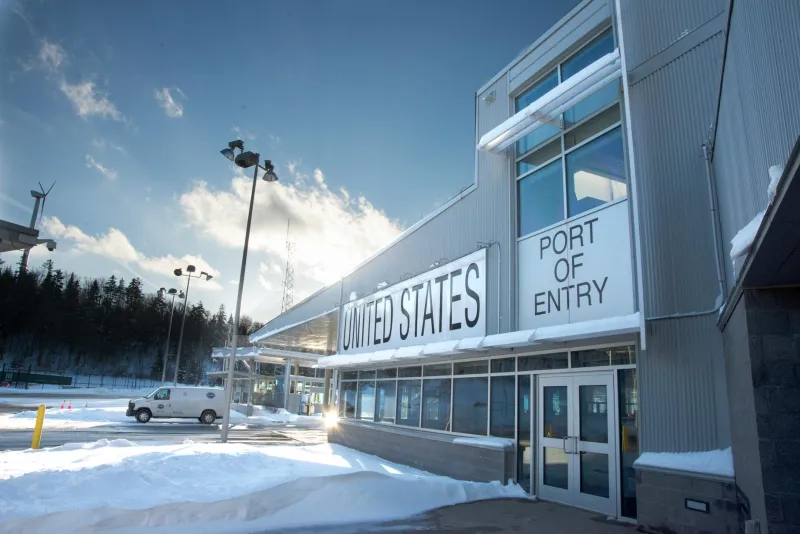
The post-9/11 security era created even stranger situations. Motion sensors along the border trigger alerts every time someone in the library walks from the American reading room to the Canadian book stacks. Border Patrol agents have learned to ignore most alarms from the library, though they still investigate when the sensors detect unusual activity after closing hours.
The Opera House Where Geography Takes Center Stage
The Haskell Opera House presents unique challenges for performers and audiences alike. Technically, every show is an international performance, with Canadian actors performing for American audiences. This creates interesting questions about work visas, tax obligations, and which country's labor laws apply to the performers.
The building's acoustics were designed without considering international law. Sound waves from the Canadian stage reach American ears without passing through any official border checkpoint, creating what customs officials jokingly call "the only duty-free entertainment in North America."
Fire safety regulations become complicated when emergency exits lead to different countries. The building must comply with both Vermont and Quebec fire codes, which sometimes contradict each other. Exit signs point toward both American and Canadian emergency services, depending on which side of the building you're on.
Living in Two Countries at Once
For residents of Derby Line and Stanstead, the international border is less of a barrier and more of an administrative inconvenience. Children grow up playing games where "the floor is lava" becomes "the floor is an international incident."
Local businesses have learned to navigate the complexities of operating in two countries. The town's restaurant serves American customers Canadian beer while accepting both US dollars and Canadian currency. The gas station on Canusa Street has pumps that dispense fuel measured in both gallons and liters, depending on which side of the border the customer parked.
Mail delivery requires constant coordination between two postal systems. Letters addressed to the same street number can end up in different countries depending on whether the sender uses "Derby Line, VT" or "Stanstead, QC." UPS and FedEx drivers need special training to navigate the town's unique geography.
The Border That Time Forgot
Today, Derby Line remains a testament to what happens when human ambition meets bureaucratic reality. The town exists as a living reminder that sometimes the most practical solution to an impossible problem is simply to ignore it.
The Haskell Library continues to operate as it always has, with patrons casually walking between countries to check out books. The opera house still stages performances where the cast and audience exist in different nations. And residents of Canusa Street continue to live their daily lives in cheerful defiance of international law.
In an era of increasing border security and international tensions, Derby Line stands as proof that some mistakes are too useful to fix. Sometimes the most practical response to an absurd situation is to embrace the absurdity and see what happens.
After all, where else in the world can you commit an international border violation just by walking to the bathroom?